



Why Product Data Management Tools Matter Today
Product success requires PDM tools, which form the framework for managing complexity. A PDM platform centralizes components and revisions, enforcing product data management best practices by design. Implementing PDM (product data management) software helps prevent errors and delays. This tool is fundamental for market speed and quality. Selecting the best product data management software transforms data into a competitive asset.
What Are Product Data Management Tools?
Product data management tools are systems for managing product information. These solutions create a source of truth for design and manufacturing data. A product data management platform secures files, manages revisions, and controls releases. This centralization is the purpose of the product data management tool. Implementing this PDM product data management software establishes product data management best practices. Deploying the best product data management software is fundamental for operational integrity.
Learn about Master product data management.
Key Features of a Product Data Management Platform
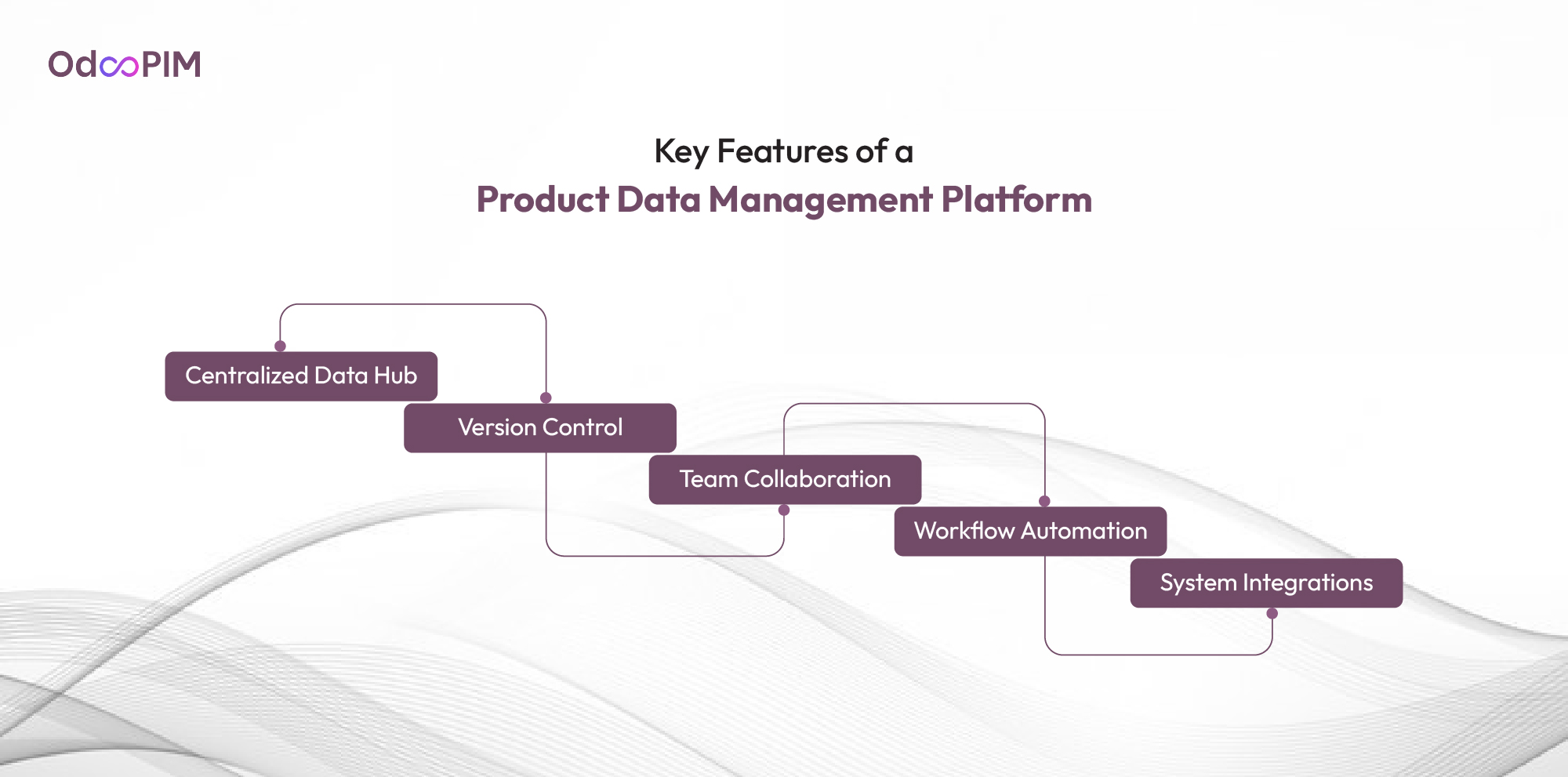
1. The Centralized Repository
A product data management platform functions as the hub for product information. This architecture eliminates the chaos of departmental silos and scattered files, replacing them with authoritative versions of specifications, drawings, and documents. Consolidating product data management tools creates the foundation necessary for scalability and informed decisions across the organization.
2. Governance and Revision Integrity: Version Control and Accuracy
PDM tools provide version control and lifecycle management, including change logging, iteration, and release. This governance maintains data accuracy and ensures that teams always work from the correct, released revision. It enforces product data management best practices by creating audit trails, preventing manufacturing or compliance errors, and securing intellectual property throughout the product’s journey from concept to retirement.
3. Team Execution: Enabling Cross-Functional Collaboration
These systems transform collaboration by granting secure, role-based access to a unified dataset. Engineering, procurement, manufacturing, and quality assurance teams can coordinate using identical, real-time information. This capability makes PDM product data management software indispensable for synchronizing projects by breaking down communication barriers, accelerating review cycles, and aligning stakeholders, reducing time-to-market, and improving product outcomes.
4. Process Standardization: The Power of Workflow Automation
A strength of a product data management tool is its ability to automate and standardize business processes. It routes tasks, manages approval sequences, triggers notifications, and enforces procedural rules without manual intervention. By automating workflows such as engineering change orders (ECOs) and release protocols, the system reduces administrative delays.
Ecosystem Connectivity
Leading PDM tools connect with ERP, PLM, and eCommerce systems. This creates a digital thread, ensuring data flows from design to delivery. A product data management platform maximizes operational visibility and strategic insight.

Common Challenges without the Right Product Data Management Tool
The Inevitability of Data Duplication and Inconsistency
Operating without a product data management platform guarantees data chaos. Information becomes fragmented across drives, email threads, and shared folders, creating multiple, conflicting versions of the component or specification. This rampant duplication leads to errors in procurement, manufacturing, and quality assurance, as teams work from outdated or incorrect files. Establishing a source of truth is a product data management best practice that cannot be achieved through manual methods alone, making the absence of PDM tools a liability for data integrity.
The Drain of Manual Processes and Updates
Reliance on manual data handling is an operational drain. Change requires a labor-intensive sequence of individual notifications, file replacements, and spreadsheet updates across departments. This process is slow and prone to human error, as updates can be missed or misapplied. These error-prone workflows highlight the role of automation in a product data management tool, which eliminates manual effort and ensures synchronous, accurate information flow.
The High Cost of Poor Collaboration
Departments operate in silos, waiting for emailed files or struggling to locate the correct person for approvals. This fractured communication slows decision-making, creates frustration, and leads to rework when assumptions prove wrong. A product data management platform dissolves these barriers by providing a shared, real-time workspace, demonstrating that teamwork is impossible without the environment that (PDM) product data management software provides.
The Path to Delayed Product Launches
Data inconsistency, manual updates, and poor collaboration result in failure. Each miscommunication and error introduces delays, pushing back prototyping, testing, and production readiness. Market windows close and launch dates slip, eroding competitive advantage and revenue. These preventable delays underscore the necessity of the best product data management software, which streamlines the development lifecycle by providing the control and visibility needed to execute projects predictably and on time.
By 2027, the application of GenAI will accelerate time to value of D&A governance and master data management programs by 40%.
–Anurag Raj, Sr. Principal Analyst, Gartner
Product Data Management Best Practices
Establish Uncompromising Data Standards
A product data management best practice is the standardization of product attributes and classifications. Define a schema for naming conventions, units of measure, and specifications across departments and product lines. This discipline is enforced by capable PDM tools, which mandate consistent data entry and eliminate ambiguous or redundant terms. A structure within your product data management platform ensures reliable reporting, accurate filtering, and system integration, making data actionable.
Assign Clear Data Ownership and Stewardship
Data accountability is the process of defining and assigning ownership of the dataset, component, and document within the system. This best practice establishes responsibility for data accuracy, currency, and security at the source. Product data management tools support this by enabling permissions and workflows that route tasks to designated stewards. This clarity prevents the “everyone’s problem is no one’s problem” scenario, a common failure point that pdm product data management software is designed to solve.
Enforce Integrity with Automated Validation Rules
Configure the system to reject incomplete entries, flag values outside acceptable parameters, and enforce mandatory fields. This guardrail is an important function of the best product data management software, transforming your platform from a repository into a governance engine. By embedding these product data management best practices into the workflow, you ensure data quality is maintained.
Govern the Timeline with Version Control
Treat version control as the law of your development process. The change, from a minor revision to a major release, should be captured, logged, and traceable. This practice provides an audit trail, ensures teams always access the correct iteration, and protects property. Superior PDM tools automate this historization, making version control an inherent feature of the workflow rather than a manual burden. It is the bedrock of compliance and reuse within any professional product data management platform.
Synchronize Ecosystems with Automated Data Propagation
Automate the flow of approved product data to connected channels, including ERP, CRM, eCommerce platforms, and digital asset managers. This practice ensures that marketing, sales, and manufacturing operate with synchronized information. The capability for automated propagation is a key differentiator of a product data management platform, closing the loop between engineering change and commercial reality to maintain market agility.

How to Choose the Best Product Data Management Software
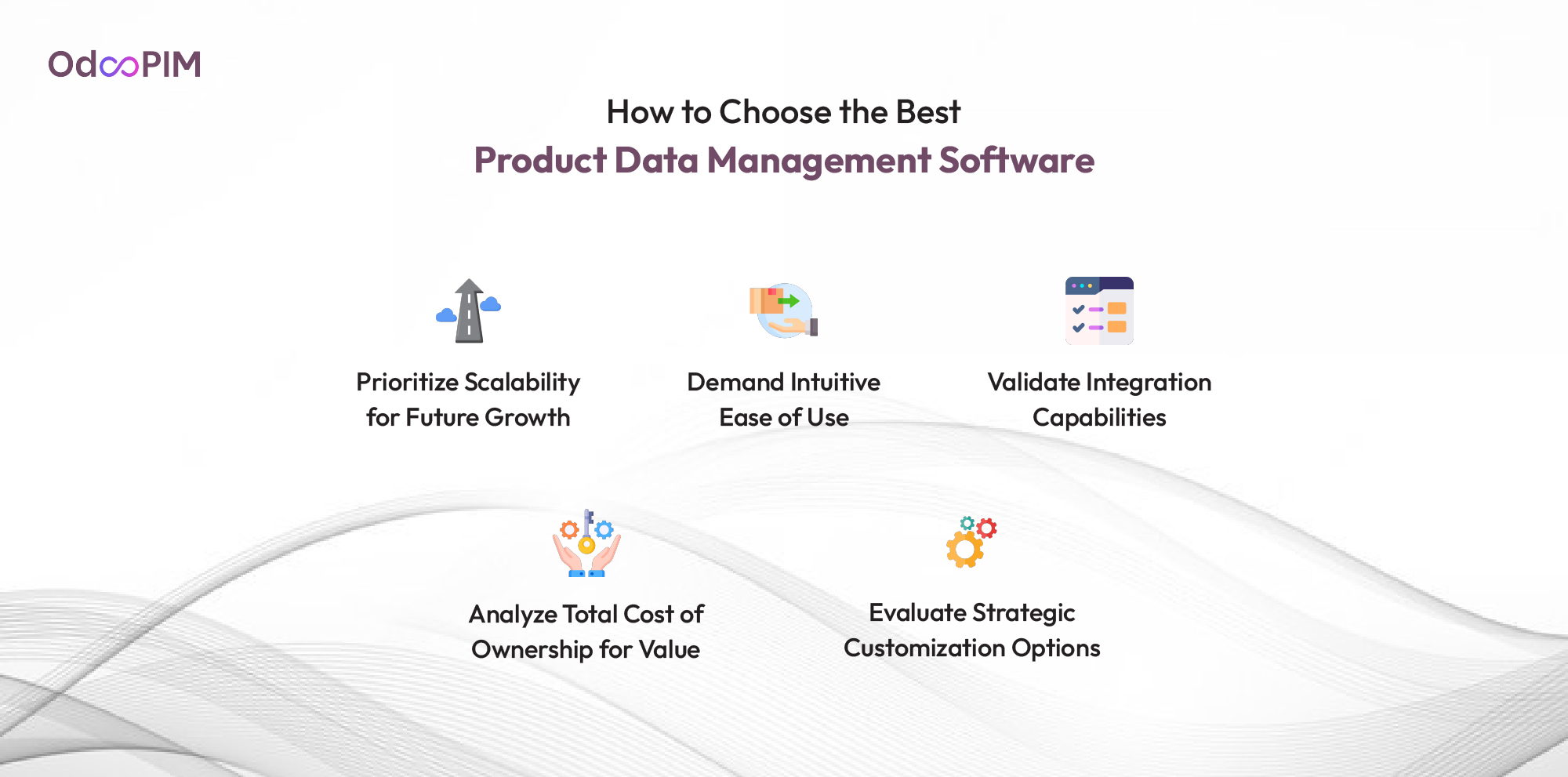
1. Prioritize Scalability for Future Growth
Select product data management tools engineered for long-term expansion. The chosen product data management platform handles increasing product lines, global teams, and data complexity without performance degradation. A scalable solution supports your needs, preventing the disruption of a future platform migration as your business grows and changes.
2. Demand Intuitive Ease of Use
The best product data management software features a logical interface that minimizes training time and user resistance. If the system is cumbersome, teams will circumvent it, eroding data integrity. A product data management tool encourages cross-departmental use, which is key to realizing its value.
3. Validate Integration Capabilities
A platform’s power is defined by its connectivity. Evaluate the product data management software for pre-built connectors to your systems, such as CAD, ERP, and eCommerce.
4. Analyze Total Cost of Ownership for Value
Assess cost-effectiveness beyond the initial license fee. Consider implementation, training, customization, and ongoing support costs relative to the operational savings and reduction the platform provides. The cost-effective PDM tools deliver a return on investment by streamlining processes, accelerating time-to-market, and preventing expensive errors.
5. Evaluate Strategic Customization Options
Determine the system’s flexibility to adapt to your workflows. While out-of-the-box functionality is important, the best product data management software offers configurable fields, workflows, and user permissions. This allows you to tailor the product data management platform to enforce your business rules and product data management best practices without compromising the system’s stability.
Where OdooPIM Fits In
1. OdooPIM as a Product Data Management Solution
OdooPIM functions as a specialized Product Data Management tool designed to master product complexity. It moves beyond disjointed spreadsheets and legacy systems, standardizes information flows, and enforces data governance, tackling the challenges that hinder speed and accuracy.

2. Delivering a Centralized Data Hub
The platform’s strength is creating a centralized product data management repository. It consolidates product information, from technical specifications and digital assets to marketing copy and channel details. This centralization is the execution of fundamental product data management best practices, AI-powered data enrichment options, easy and smart onboarding, integration with an expanding set of sales channels, and the elimination of errors and misalignment.
Learn more about product information management.
3. Integration Within the Odoo Ecosystem
OdooPIM excels through its integration with the broader Odoo suite, including Inventory, eCommerce, CRM, and other modules. This connected ecosystem allows approved product data to flow to sales platforms, inventory management, and financial systems. This connectivity makes it a powerful pdm product data management software choice, as it closes the loop between data management and business execution without the need for third-party connectors.
4. A Cost-Effective Platform for Growth
OdooPIM presents itself as a cost-effective product data management platform, for growing and mid-market businesses. It avoids hefty licensing and implementation fees while offering functionality. Its one-time price model, combined with the gains of automation and error reduction, positions OdooPIM as a choice for the best product data management software for organizations.
5. Built for Cross-Industry Versatility
The system’s adaptable data model makes OdooPIM suitable for multiple industries, from manufacturing and distribution to retail and wholesale. Its flexibility allows companies to tailor the product data management tool to their product structures, attributes, and enrichment processes. This versatility ensures that businesses can implement OdooPIM as their foundational product data management platform, regardless of their catalog complexity or market requirements.
PDM Tools vs Traditional Product Data Management Methods
The Limitations of Spreadsheets Versus Specialized PDM Tools
Traditional spreadsheets are static, isolated documents ill-equipped for collaborative product data management. They fracture information across unconnected files, leading to duplication and version confusion. PDM tools provide a product data management platform designed for managing relationships and lifecycle states. The shift from spreadsheets to built PDM software is a move from data chaos to controlled governance.
Manual Processes Versus Automated, Error-Proof Workflows
Manual systems rely on human memory, email chains, and ad-hoc checklists to manage changes, creating risk for oversight and error. These methods delay product launches and drain operational resources. A product data management tool automates important workflows, such as change approvals and data propagation, ensuring consistency and speed. This automation embodies the value of the best product data management software, transforming manual tasks into reliable, repeatable processes.
Fragmented Information Versus a Source of Truth
Traditional methods create multiple, conflicting versions of product data across departments like engineering, sales, and manufacturing. This fragmentation leads to mistakes and misalignment. The advantage of PDM product data management software is establishing one real-time source of truth accessible to authorized stakeholders. This platform enforces product data management best practices, ensuring decisions are based on current information.
The Strategic Imperative of PDM Tools
The implementation of PDM tools delivers transformative clarity and control. These systems centralize information, automate workflows, and enforce governance, addressing the inefficiencies of manual methods. A capable product data management platform provides the structure for accuracy, speed, and collaboration, turning product data from a liability into a competitive asset.
Selecting Your Foundation: The Correct Product Data Management Tool
The right product data management tools should align with your operational scale, integration requirements, and business processes. It should embed product data management best practices by design. This decision defines your organization’s ability to execute, making the selection of the best product data management software an investment in future-proofing your operations.
Moving Forward with Scalable Solutions
For businesses seeking a powerful solution, platforms like OdooPIM demonstrate the standard. These scalable PDM tools offer the control and ecosystem integration necessary for growth without prohibitive complexity or cost. Adopting such a product data management platform is a decisive step toward operational maturity, ensuring your data infrastructure accelerates progress rather than constraining it.

FAQ
1. What Does PDM Mean?
PDM stands for Product Data Management. It is a methodology and technology framework to organize and govern information related to a company’s products. In practice, PDM means implementing a set of product data management best practices, like standardized naming conventions, ownership, and revision control, supported by software. The term encapsulates the discipline of treating product data as a business asset, ensuring it is accessible and secure from concept through to obsolescence. A PDM product data management software is the technological embodiment of this discipline, enabling businesses to execute this methodology with scale.
2. What is the Best PDM Software?
The best PDM software is the platform that effectively aligns with your business scale, industry requirements, and existing technology ecosystem. There is no universal leader, as the product data management tool for a global manufacturer differs from that of a mid-sized distributor. Key evaluation criteria include integration capabilities with CAD, ERP, and eCommerce systems, an intuitive user interface to drive adoption, and the flexibility to model your product structures and workflows. The best product data management software is one that your teams will use consistently, embeds into your operations, and scales to support future growth without imposing prohibitive complexity or cost.
3. What are PDM Technologies?
PDM technologies refer to the software capabilities and architectural components that enable product data management. These technologies include relational databases for a source of truth, version control engines that track change with precision, automated workflow orchestrators for routing approvals, and secure access control mechanisms. Advanced PDM tools also incorporate integration APIs and connectors to synchronize data across the broader digital landscape, including PLM, ERP, and CRM systems. Together, these technologies form the backbone of a capable product data management platform, moving beyond file storage to provide governance, lifecycle management, and collaborative workspaces for cross-functional teams.
4. How Can a Centralized Product Data Management Tool Reduce Manual Product Data Updates Across Teams?
A centralized product data management tool eliminates manual updates by making a data change and is available to authorized users and connected systems. When an engineer releases a new part revision in the product data management platform, the update is propagated. Marketing teams access the latest specifications for catalogs, procurement sees updated supplier data, and the eCommerce feed refreshes with correct attributes, without an email or manual spreadsheet edit. This automated synchronization is a function of the best product data management software, which enforces product data management best practices by design. It eradicates the lag and errors in manual methods, ensuring consistency, saving time, and allowing teams to focus on value-added work instead of administrative data management.
