


The Need for a PDM System
A PDM system is the operational backbone for an engineering team. The complexity of product development, with its multitude of files, revisions, and collaborators, renders manual data management obsolete and risky. Without a formal product data management system, teams face version chaos, wasted hours searching for the correct files, and the consequences of working with outdated information.
The answer to “what is a PDM system?” is this: it is the framework for controlling your product’s digital definition. Moving from ad-hoc processes to product data management systems establishes discipline. It enables secure collaboration, enforces release protocols, and maintains an audit trail. Investing in a PDM system is an investment in velocity, quality, and competitive advantage, forming the data foundation for future innovation and scaling.
What Is a PDM System?
A PDM system is a crucial component of your product’s digital lifecycle. This product data management system centralizes design files, documents, and bills of materials into a secure, searchable vault. The purpose is to establish absolute control over revisioning, access, and approval workflows.
PDM solutions resolve chaos. They eliminate version confusion, prevent data loss, and stop unauthorized changes. A PDM system with a CAD integration captures design data at its source. Implementing product data management systems transforms scattered information into a reliable asset for your team.
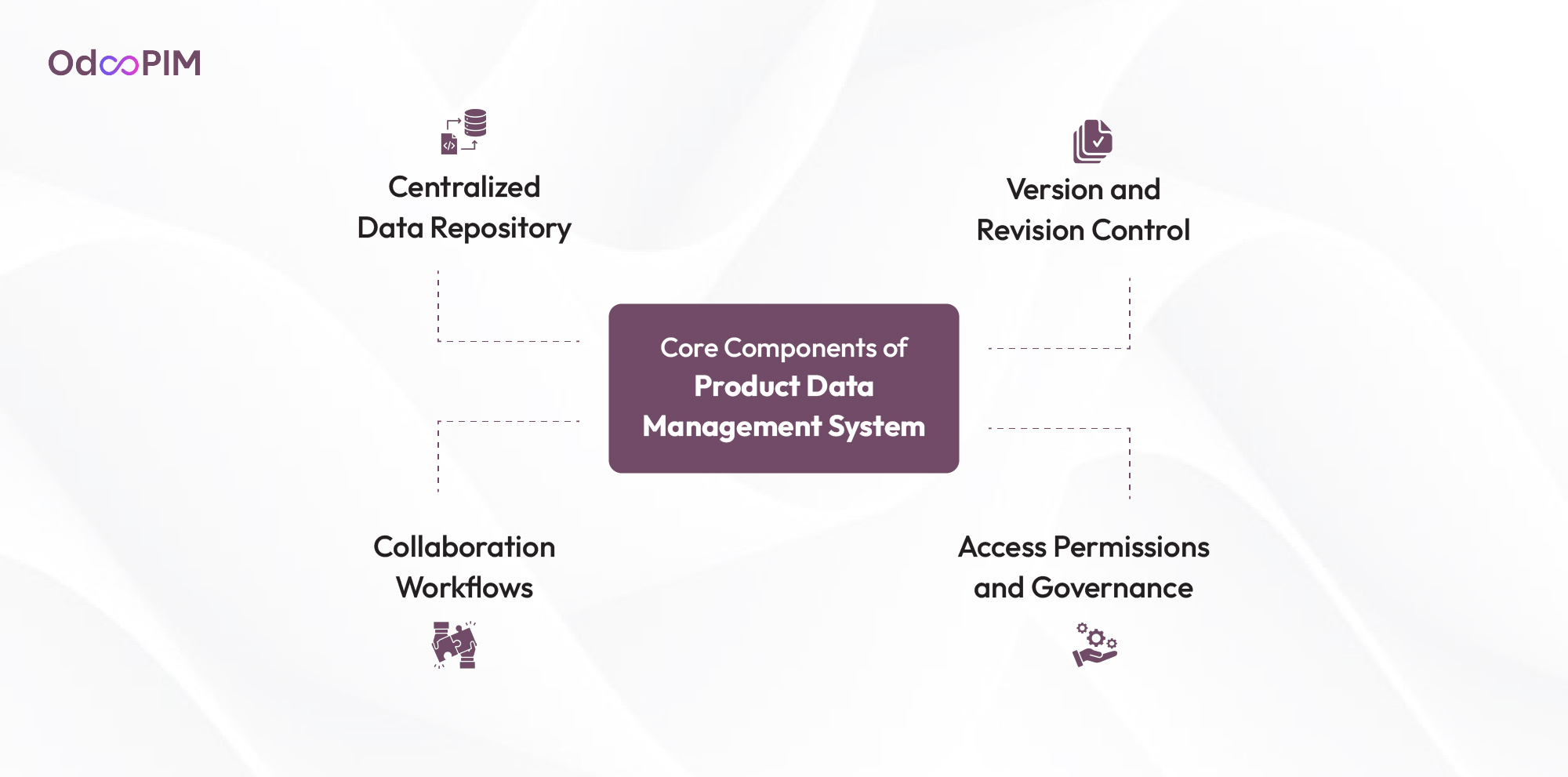
Core Components of Product Data Management Systems
1. Centralized Data Repository
The foundation of any PDM system is a secure data vault. This repository eliminates the chaos of network drives, personal folders, and disparate file servers by providing a single repository for CAD models, specification documents, and bill of materials. A product data management system ensures that team members, from engineering to manufacturing, access the same current and approved files. Without this centralization, collaboration falters, and data integrity collapses, making the other components of the PDM-system difficult to implement reliably.
2.Version and Revision Control
Professional PDM solutions automate the tracking of file modifications. This functionality creates an immutable audit trail, preserving design iteration and preventing accidental overwrites. When users check files in and out of the system, version control maintains order, allowing teams to progress while retaining the ability to revert to or reference any prior state. This capability answers a key part of “what is a PDM system?”, it is the mechanism that brings discipline and traceability to the design evolution process.
3. Access Permissions and Governance
Beyond storage, a product data management system enforces security and process through user permissions. This layer controls who can view, edit, approve, or release specific data sets. It protects property by restricting access and ensuring procedural compliance by locking down finalized designs, preventing unauthorized changes. This transforms the environment from a library into a managed workspace, a feature that distinguishes enterprise-grade PDM systems from basic file management tools.
4. Collaboration Workflows
Advanced PDM systems orchestrate teamwork by automating and standardizing key business processes. They manage workflows for engineering change orders (ECOs), design reviews, and release approvals, automatically routing tasks, sending notifications, and requiring formal sign-offs. This eliminates communication gaps and procedural bottlenecks. When integrated as a PDM system CAD, these workflows operate within the design software itself, connecting people and data at the point of creation to accelerate development cycles and improve decision-making.
Learn more about PDM tools.

PDM System vs Traditional Product Data Storage
File Servers vs Structured PDM Systems
Traditional file servers act as digital storage rooms, requiring users to manually manage folder structures and naming conventions. This approach devolves into a labyrinth of duplicate files and conflicting versions. In stark contrast, a PDM system imposes a structured framework from the start. It organizes data based on project, part, and revision, turning storage into an information architecture. Adopting a formal product data management system replaces guesswork with access.
Manual Tracking vs Automated Control
Relying on spreadsheets, email threads, and memory to track design changes is error-prone and unscalable. This manual method creates risk, as important decisions are made using outdated or incorrect information. A PDM-system eliminates this vulnerability by automating version control, change history, and release status. The value of these PDM solutions lies in their ability to enforce consistency and provide an automatic, auditable record of actions taken on a product’s data.
Benefits of Adopting a PDM Solution
The move to professional product data management systems delivers transformative advantages. It accelerates time-to-market by eradicating search time and rework caused by version errors. It strengthens security and compliance through access and permission controls. A PDM system CAD integration ensures that automated data management is baked into the design process. The answer to “what is a PDM system?” is clear: it is the platform that converts data from a liability into a secure, scalable, and collaborative corporate asset.
Research shows that 68% of global retailers use a product data management or PIM system to manage product information across three or more sales channels, up significantly from earlier years — underscoring growing demand for structured product data in modern ecommerce.
– Zipdo
Choosing the Right PDM Solution
1. Scalability and Flexibility
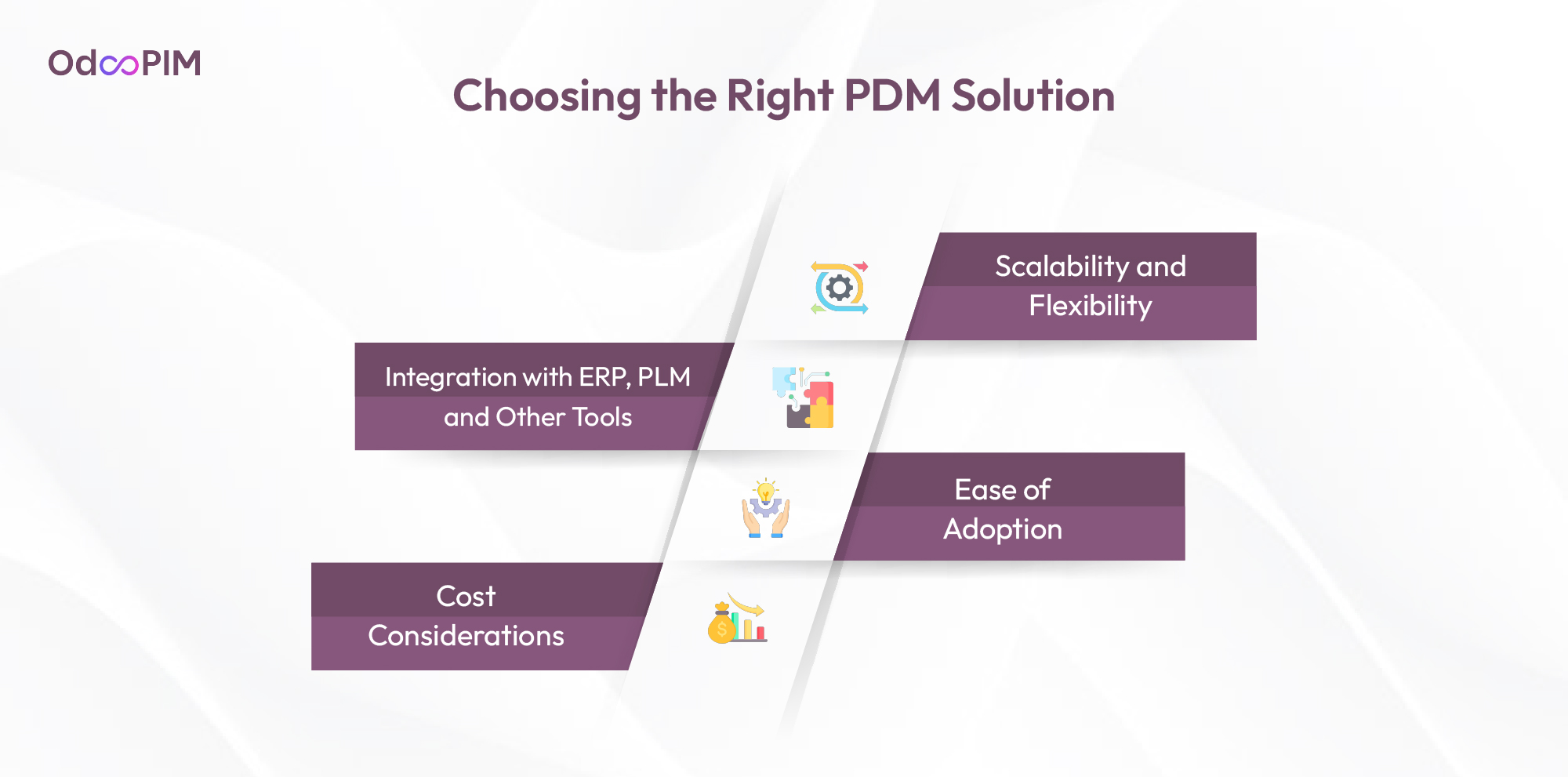
Select a PDM system that can scale from a few users to hundreds, and from managing thousands of files to millions, without performance degradation. Look for flexibility in deployment, cloud-based, on-premise, or hybrid, to align with IT strategy and future needs. A product data management system creates future roadblocks, while a scalable one becomes a long-term asset.
2. Integration with ERP, PLM, and Other Tools
The power of a PDM system is unlocked through integration with your existing ecosystem. Demand connections to ERP for bill of materials synchronization, to PLM for extended lifecycle management, and to ensure a PDM system CAD integration. These solutions must facilitate smooth data flow; an isolated product data management system creates more silos than it breaks down.
3. Ease of Adoption
The powerful PDM-system is useless if your team rejects it. Prioritize solutions with an intuitive user interface that minimizes training time and disruption. The platform should simplify daily tasks. User resistance is the cause of implementation failure, so evaluating “what is a PDM system?” should include how engineers and designers can integrate it into their existing workflows.
4. Cost Considerations
An evaluation includes implementation, customization, ongoing maintenance, and potential hardware upgrades. Compare the total cost of ownership against the ROI from reduced errors, faster cycles, and recovered engineering hours. The correct PDM solutions justify their investment by eliminating hidden costs associated with data mismanagement and process inefficiency.

How Modern PDM Systems Support Business Growth
1. Faster Product Development Cycles
A PDM system accelerates time-to-market by eradicating non-value-added tasks. Engineers spend less time searching for files, reconciling versions, and managing releases, dedicating more hours to design and innovation. This streamlined workflow, when powered by a PDM system CAD integration, compresses schedules and enables faster iteration, translating to competitive advantage.
2. Improved Data Accuracy
PDM solutions enforce a source of truth, eliminating errors that stem from outdated drawings or incorrect revisions. Automated version control and release management within a product data management system ensure that team members work from the approved data. This accuracy prevents rework, reduces scrap, and builds confidence in the integrity of your product information.
3. Better Cross-Team Collaboration
Product data management systems break down departmental silos by providing secure, governed access to data across engineering, manufacturing, procurement, and quality. Structured workflows route information and tasks, while audit trails create transparency. This environment transforms isolated efforts into synchronized teamwork, aligning stakeholders and accelerating decision-making.
4. Reduced Operational Inefficiencies
A PDM-system targets and eliminates hidden costs. It reduces the man-hours lost to manual data management, minimizes physical prototypes through better digital reuse, and cuts licensing waste by optimizing software seat usage. By automating governance and process, these PDM systems convert administrative overhead into productive capacity, improving your bottom line.
Learn about Product master data management.
Where OdooPIM Fits in a Modern PDM Ecosystem
1. OdooPIM as a Flexible Product Data Management System
OdooPIM answers the need for a PDM system that grows with your business. It delivers the functions of a product data management system without the architecture of traditional solutions. This flexibility makes it a PDM-system for companies that require data governance alongside the ability to customize workflows and data models to fit processes, not the other way around.
2. Centralized Product Information
Like all PDM systems, OdooPIM centralizes technical specifications, digital assets, documentation, and supplier information into one searchable hub. AI allows users to quickly update missing information and this capability ensures data consistency across channels.
3. Smooth Integration with Odoo-Based Environments
OdooPIM’s distinct advantage is its integration within the broader Odoo ecosystem. It connects with Odoo’s ERP, CRM, eCommerce, and Manufacturing apps, creating an operational platform. For businesses using Odoo, this makes OdooPIM a logical and synergistic PDM solution, enabling a flow of product data from engineering to sales to the shop floor.
4. Ideal for Businesses Looking for Adaptable PDM Solutions
OdooPIM is suited for growing businesses that require a product data management system but need to avoid the cost and complexity of traditional, engineering-heavy PDM systems. Its AI features make it ideal for teams managing complex product catalogs, variants, and omnichannel information. It also supports teams who prioritize integration, agility, and a holistic business view over PDM system CAD functionality.
5. Recap the Importance of Adopting a PDM System
Implementing a PDM system is a decisive move for any product-driven company. It is the answer to the chaos of uncontrolled data, replacing risk with reliability. A product data management system provides the control, traceability, and security required to manage complex product information with confidence. It is the foundational step toward scalable, efficient operations.
6. Emphasize Long-Term Value of Scalable Product Data Management Systems
The power of investing in PDM solutions lies in their long-term strategic value. Scalable product data management systems are not just tactical tools for file management; they are platforms that support business growth, enable faster innovation, and protect intellectual property. Choosing a PDM-system like OdooPIM ensures your data architecture evolves from a cost center into a durable competitive asset.
7. Encourage Evaluating Flexible Platforms like OdooPIM
When selecting your PDM system, prioritize platforms that offer flexibility and business integration. Evaluate solutions like AI-enabled OdooPIM, which delivers PDM capabilities within a connected ecosystem. For many businesses, the future of data management lies not in isolated, engineering-only tools, but in adaptable, business-wide PDM solutions that unify your operations.

FAQ
1. How does a PDM system help maintain a source of truth for product data?
A PDM system creates a source of truth by centralizing product files into one secure vault. It eliminates scattered data by ensuring team members access the same controlled, master file from this definitive repository. Automated check-in/check-out protocols in these PDM solutions prevent conflicting edits and duplicate work. This approach provided by a product data management system guarantees that downstream processes rely on identical, approved information, removing ambiguity and error from the workflow.
2. How do PDM solutions handle frequent product updates and revisions?
PDM systems manage updates through version and revision control. Every file change is tracked, logged, and preserved within the PDM-system, creating a historical audit trail. These product data management systems enforce formal release workflows to govern when a revision becomes official. This allows teams to iterate while maintaining perfect order, ensuring that “what is a pdm system” is defined by its ability to control constant change without chaos.
3. Is PDM an ERP system?
A PDM system is not an ERP system, it focuses on engineering design data, technical files, and product lifecycle workflows. ERP manages business resources like finance, inventory, and human resources. While integrated PDM solutions feed accurate bill of materials data into ERP, they remain distinct, specialized tools for managing the product’s digital definition and development process.
4. What does PDM stand for?
PDM stands for Product Data Management, it refers to a specialized software platform for managing data related to a product’s design and manufacturing. In practice, when people ask “what is a pdm system?”, they are referring to these product data management systems that control CAD files, documents, revisions, and approvals. The term PDM-system is common for engineering discipline and its technological solutions.
5. What is the best PDM software?
The “best” PDM system depends on your company’s size, budget, and ecosystem. For integrated CAD environments, a PDM system CAD like SOLIDWORKS PDM is optimal. For businesses seeking a flexible platform within a broader suite, solutions like OdooPIM are strong pdm solutions. The product data management system aligns with your processes, scales with your growth, and integrates with your existing tools.
