What Is PIM Software? (Quick Recap)
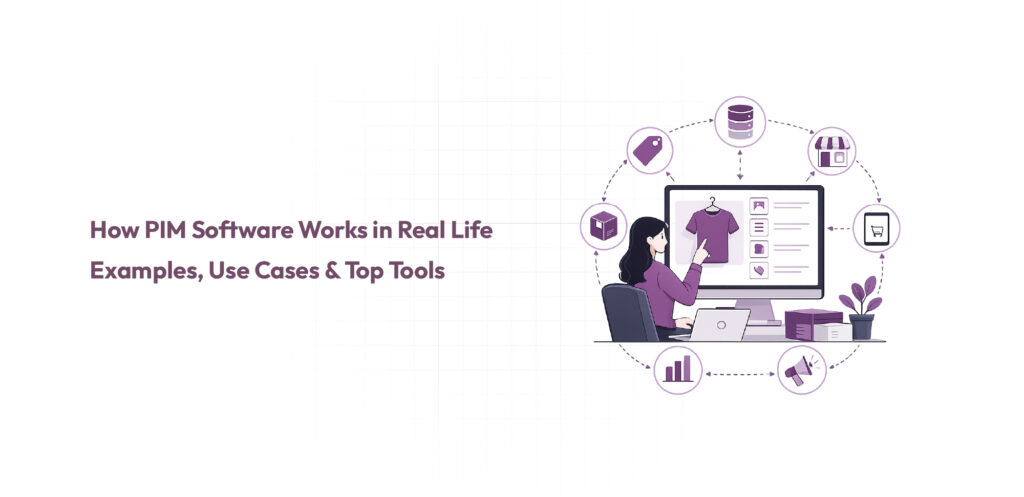
PIM software examples like Akeneo, Plytix, and OdooPIM centralize messy product data into one clean source of truth. Product information management examples include a clothing brand managing sizes and colors across fifty retailers or a hardware distributor syncing spec sheets to every channel automatically. PIM software use cases span PIM for ecommerce examples (pushing listings to Shopify and Amazon) and PIM for manufacturers (linking engineering specs to sales catalogs). Examples of PIM tools in action show how PIM system real-world examples eliminate spreadsheet chaos, how PIM software works in practice is simple: one master record, infinite destinations, zero manual re-entry.
What Kind of Data Does PIM Manage?
PIM software manages three data layers. Base attributes include SKUs, titles, descriptions, weights, dimensions, and pricing. Enriched content adds SEO metadata, category-specific fields like „fabric composition“ for apparel or „horsepower“ for tools, and localized translations for each market. Media assets connect images, videos, and 3D models to specific product variants. Product information management examples show how a single jacket might have different size charts for US, EU, and Asian markets, all stored in one record.
The system also handles relationships and rules. Variant links connect a t-shirt’s color and size options. Channel mappings transform the master record into each destination’s required schema. How PIM software works in practice means a change to packaging dimensions updates Amazon, Google Shopping, and your wholesale PDF simultaneously. PIM software use cases include a furniture retailer managing assembly instructions per SKU or a parts distributor linking compatibility matrices across 10,000 components.
Who Uses PIM Software and Why?
PIM for ecommerce examples include online stores launching hundreds of products monthly. Marketing teams use examples of PIM tools to write channel-specific copy without duplicating work. Operations people appreciate version control and audit trails. PIM software examples like Plytix serve small ecommerce brands with lean teams. Larger retailers adopt PIM system real-world examples such as Salsify to syndicate content to dozens of retail partners simultaneously while tracking which images drive conversions.
PIM for manufacturers serves a different crowd. Product managers, engineering teams, and B2B sales reps need technical specs, compliance documents, and CAD files organized by the product family. Product information management examples here include an industrial parts maker feeding data to distributor portals, repair networks, and its own ecommerce site. PIM software use cases for manufacturers focus on ERP integration, attribute-based ordering, and role-based catalogs, engineering sees voltage ratings, sales sees marketing copy, customers see both.
Learn about Catalog management software.
PIM makes a single, trusted source of product information available for multichannel commerce and data exchange.
-Gartner Market Guide for Product Information Management Solutions
Real-World Examples of How PIM Software Is Used
Example 1: Ecommerce Brand Managing Products Across Multiple Channels
A direct-to-consumer footwear brand sells on Shopify, Amazon, eBay, and Google Shopping. Before PIM for ecommerce examples became relevant, their team manually reformatted spreadsheets for each channel, four hours daily. With PIM software examples like Plytix, they now enrich product data once. The system transforms master descriptions into Amazon’s short format, eBay’s HTML structure, and Google’s attribute requirements automatically. How PIM software works in practice means a price change on their website propagates to all channels within minutes. Product information management examples like this cut manual work by 80% and eliminate channel-specific errors entirely.
Example 2: Manufacturer Distributing Technical Specs to Resellers
An industrial pump manufacturer supports 200 resellers, each needing customized product sheets. PIM for manufacturers solves the chaos of emailing Excel files back and forth. PIM software use cases like this use Akeneo to store master spec sheets, CAD drawings, and compliance certificates. Resellers log into a portal and generate branded PDFs with only the products they carry. Examples of PIM tools with role-based access ensure each partner sees approved pricing and regional variants. PIM system real-world examples show a 90% reduction in support tickets about incorrect specifications.
Example 3: Retailer Syncing Product Data Across Online and Physical Stores
A home goods retailer with 50 physical stores and a Magento website suffered from inconsistent pricing. An in-store promotion would not appear online for three days. PIM software examples like inRiver changed that. How PIM software works in practice for omnichannel retail means one product record feeds both POS systems and web servers simultaneously. Store managers update prices on a tablet; the website reflects changes instantly. Product information management examples here include inventory visibility, customers see real-time stock at their local store. PIM for ecommerce examples rarely address physical retail, but hybrid retailers need both.
Example 4: Wholesaler Keeping Partner Catalogs Up to Date
A beverage wholesaler distributes 5,000 SKUs to bars, restaurants, and hotels. Each customer gets a custom price list and product selection. Before PIM software use cases addressed this, their team manually generated PDFs monthly, and errors slipped through constantly. Examples of PIM tools like OdooPIM now automate the process. Wholesale partners access live web catalogs with their specific pricing tiers. PIM system real-world examples show that real-time catalogs increase order accuracy by 35% because partners always see current inventory and pricing. No more „but the PDF you sent last week said…“
Example 5: Global Brand Managing Multilingual Product Content
A European cosmetics brand sells in twelve countries across four languages. Each market has unique labeling requirements, measurement units, and banned ingredient lists. PIM software examples like Bluestone handle this by storing one master record with localized overlays for each region. How PIM software works in practice for global brands means a product manager in Paris updates French descriptions while a counterpart in Berlin manages German compliance text, all in the same system. Product information management examples like this reduce translation costs by 50% because you never duplicate unchanged fields. PIM for manufacturers with global distribution relies on this multilingual backbone to avoid regulatory fines and embarrassing translation errors.

Examples of PIM Software by Business Size
PIM Software Examples for Small Businesses
Plytix leads PIM software examples for small businesses because of flat monthly pricing with zero per-user fees. Examples of PIM tools like Plytix offer self-service onboarding, Shopify connectors, and clean interfaces that non-technical users master in days. PIM for ecommerce examples with small catalogs under 5,000 SKUs rarely need enterprise features. How PIM software works in practice for lean teams means setting up in an afternoon, not months. The trade-off? Limited workflow automation, but most small operators never need more.
PIM Software Examples for Mid-Market Companies
Akeneo’s Growth tier dominates PIM software examples for mid-market companies with 5,000 to 50,000 SKUs. PIM software use cases include regional retailers expanding to multiple channels or B2B manufacturers adding direct-to-consumer sales. PIM for manufacturers at this scale needs ERP integration, Akeneo delivers via third-party connectors. How PIM software works in practice for mid-market means supporting ten to fifty users across marketing, operations, and sales. Implementation takes two to four months, the sweet spot between too simple and overkill.
PIM Software Examples for Enterprise Organizations
Salsify and Syndigo represent PIM software examples for enterprise organizations with massive catalogs and complex syndication needs. PIM system real-world examples involve global brands managing thousands of users, dozens of languages, and regulatory compliance across regions. Product information management examples from Fortune 500 companies show ROI through reduced chargebacks and faster time-to-market. How PIM software works in practice at enterprise scale means nine-month implementations with certified partners. Small businesses should look away, these platforms will drown you in features you will never use.
Popular PIM Software Examples in 2026
OdooPIM: PIM Example Native to the Odoo Ecosystem
PIM software examples rarely include native ERP integration, but OdooPIM lives inside the same database as Odoo’s inventory and sales modules. Examples of PIM tools like this eliminate sync delays and middleware costs. How PIM software works in practice for Odoo users means your product team enriches descriptions while your warehouse updates stock, all changes appear everywhere instantly. PIM for manufacturers already running Odoo find this the lowest-friction option available.

Akeneo: Open-Source and Enterprise PIM Example
Akeneo offers two tracks: free Community Edition for technical teams and paid Enterprise for growing brands. PIM software use cases range from a fifty-SKU startup to a 500,000-SKU global retailer. Product information management examples show Akeneo handling complex variant relationships that other platforms cannot model at all. PIM system real-world examples include B2B distributors managing nested product families with dozens of unique attributes per level. The interface feels dense, but the power underneath justifies the learning curve.
Pimcore: Open-Source PIM With MDM and CMS Combined
Pimcore bundles PIM, MDM, DAM, and CMS into one open-source platform. PIM software examples this comprehensive usually require separate contracts and integrations. How PIM software works in practice with Pimcore means your product team, content team, and asset team share one infrastructure. Examples of PIM tools like this appeal to enterprises wanting fewer vendor relationships. The catch: self-hosting requires serious engineering resources. Managed cloud versions exist but cost more.
Salsify: PIM Example With Digital Shelf Analytics
Salsify tracks how your product content performs on retailer sites, a feature most PIM software examples ignore. PIM for ecommerce examples here include seeing which images drive clicks on Amazon versus Walmart. Product information management examples from Salsify customers show content optimization based on actual conversion data, not guesses. How PIM software works in practice means you stop asking „is this good content?“ and start knowing. The price tag reflects this intelligence, except six-figure annual commitments.
Plytix: PIM Example Built for SMBs
Plytix charges flat monthly fees regardless of user count, making it the most accessible PIM software example for small teams. Examples of PIM tools in this category prioritize speed over depth, you can go from signup to first channel export in an afternoon. PIM software use cases include bootstrapped ecommerce brands under 10,000 SKUs with straightforward attribute needs. PIM for manufacturers with complex specifications may outgrow it, but most retailers never hit that ceiling.
Inriver: PIM Example for Complex B2B Catalogs
Inriver builds its architecture around one concept: feed once, publish everywhere. PIM system real-world examples include industrial parts distributors sending data to reseller portals, ecommerce sites, and print catalogs simultaneously. How PIM software works in practice for B2B means role-based views, engineers see voltage ratings, sales sees marketing copy, customers see both. PIM for manufacturers with thousands of technical specifications finds Inriver’s guided onboarding and ERP integration essential. Implementation requires certified partners, so budget accordingly.
PIM Software Examples by Industry
Retail and Ecommerce
PIM for ecommerce examples include a multi-brand retailer syncing thousands of SKUs across Shopify, Amazon, and Google Shopping simultaneously. Product information management examples in retail focus on speed, new collections launch weekly, so bulk editing and template-based enrichment become essential. Examples of PIM tools like Plytix or Akeneo let merchants update descriptions once and watch changes propagate everywhere within minutes. How PIM software works in practice for retail means eliminating the Monday morning scramble of „which channel has the wrong price this week?“
Manufacturing and Distribution
PIM for manufacturers involves technical specs, CAD files, compliance documents, and component compatibility matrices. PIM software examples like inRiver or Akeneo handle attribute-based ordering, a motor has voltage, RPM, mounting pattern, and efficiency rating, each critical for different buyers. PIM system real-world examples include a parts distributor feeding data to reseller portals, repair networks, and its own ecommerce site from one master record. How PIM software works in practice for manufacturing means engineers update a spec once; every channel reflects that change instantly.
Fashion and Apparel
Fashion PIM must handle size charts, color variants, fabric compositions, and seasonal imagery. PIM software examples for apparel include Salsify and Akeneo, which manage complex variant relationships, a single jacket comes in twelve sizes and eight colors, each with its own image set. Product information management examples in fashion show teams using PIM to localize sizing for different regions (US 8 vs EU 38) automatically. How PIM software works in practice means a designer uploads spring collection assets once, and the system pushes them to website, lookbook PDFs, and retailer portals.
Electronics and Technology
Electronics catalogs demand spec sheets, compatibility lists, firmware versions, and region-specific certifications (FCC, CE, RoHS). Examples of PIM tools like Akeneo or Pimcore excel here because they support attribute hierarchies, a laptop has processor, RAM, storage, screen size, ports, and battery life, each searchable. PIM software use cases include a consumer electronics brand feeding data to Amazon’s detailed product pages and Best Buy’s internal systems simultaneously. How PIM software works in practice for electronics means a product manager updates a spec, and compliance teams get flagged for review before anything is published.
Food and Consumer Goods
Food PIM manages nutritional panels, ingredient lists, allergen statements, and region-specific labeling laws. PIM system real-world examples include a beverage brand distributing to grocery chains across three countries, each with different font size requirements for allergen warnings. PIM software examples like Syndigo or Akeneo include workflow approvals that force legal review before any label change goes live. Product information management examples in CPG show teams reducing compliance penalties by 80% because the system catches missing mandatory fields before publishing. How PIM software works in practice means a nutritionist updates a recipe, and all downstream packaging files and retailer portals sync automatically.
Key Features You’ll See Across PIM Software Examples
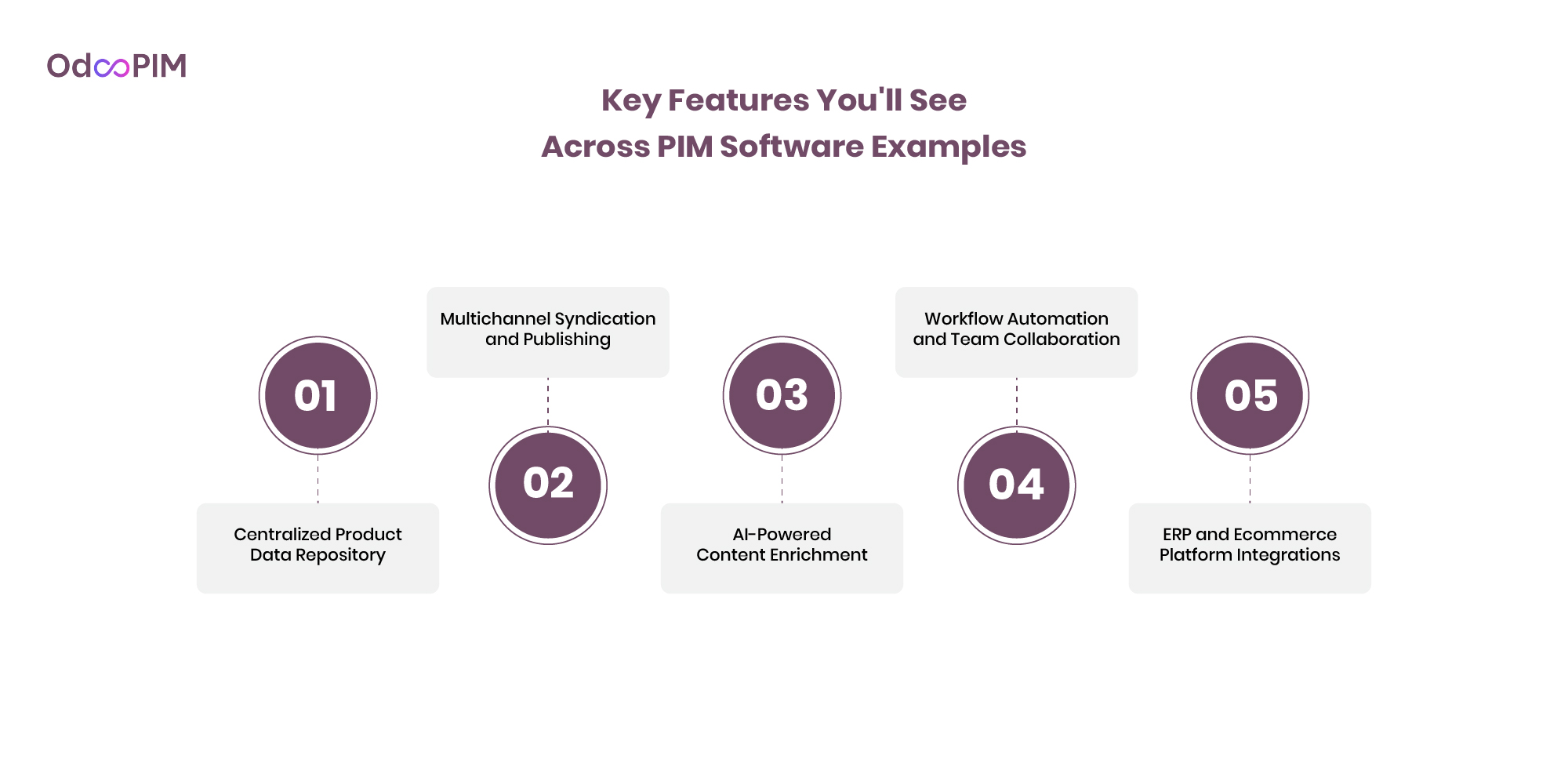
Centralized Product Data Repository
Every PIM software example starts with one master record for each product. No more hunting across spreadsheets, drives, or emails for the correct spec sheet. Product information management examples show how a single jacket record holds base attributes, variant links, localized descriptions, and channel-specific transformations all in one place. How PIM software works in practice means your team stops asking „which file is current?“ because only one version exists. Examples of PIM tools without strong centralization defeat their own purpose, if data lives in three places, you still have chaos.
Multichannel Syndication and Publishing
Syndication pushes your master product data to every sales channel automatically. PIM for ecommerce examples include feeding your website, Amazon, eBay, Google Shopping, and social commerce platforms from one interface. PIM software use cases for manufacturers involve sending technical specs to distributor portals, print catalogs, and B2B marketplaces simultaneously. How PIM software works in practice means a price change updates everywhere within minutes, not days. PIM system real-world examples show retailers cutting channel management time from twenty hours weekly to two.
AI-Powered Content Enrichment
AI fills missing attributes, generates SEO descriptions, and categorizes products without human input. PIM software examples from Akeneo and Salsify include models that learn from your manual corrections over time. Product information management examples show a 5000-SKU catalog going from raw supplier spreadsheets to channel-ready listings in days instead of months. How PIM software works in practice for enrichment means uploading a messy CSV and watching the system suggest categories, extract specs, and write draft descriptions. Examples of PIM tools without AI force your team into tedious manual data entry that kills productivity.
Workflow Automation and Team Collaboration
Workflows assign tasks, enforce approval chains, and track every change. PIM software use cases include a product manager enriching a new item, then routing it to legal for compliance review before publishing. PIM for manufacturers relies on role-based permissions, engineers see technical fields, marketers see copy fields, neither steps on the other’s work. How PIM software works in practice means you never wonder „who changed the description last Tuesday?“ because audit logs answer instantly. PIM system real-world examples show collaboration features reducing email chains about product data by 90%.
ERP and Ecommerce Platform Integrations
Integrations connect your PIM to the systems your team already uses daily. PIM for ecommerce examples include two-way sync with Shopify, Magento, and BigCommerce for real-time inventory and price updates. Product information management examples for manufacturers show native connectors to SAP, Microsoft Dynamics, or Odoo pulling product data from source. How PIM software works in practice with proper integrations means your warehouse updates stock in the ERP, and every sales channel reflects that change instantly. Examples of PIM tools with shallow connectors force manual CSV exports, avoid them.

PIM vs Spreadsheets: A Practical Example
What Managing Products Without PIM Looks Like
Your team maintains five spreadsheets. Marketing owns descriptions. Operations owns specs. Sales owns pricing. Each file drifts out of sync within days. A product manager updates the weight in one spreadsheet but forgets the other four. PIM software use cases emerge when someone notices Amazon shows the wrong shipping weight, after fifty customers complain. How PIM software works in practice versus spreadsheets becomes clear during a seasonal launch. Your team emails file attachments back and forth, overwrites each other’s work, and misses the deadline. Product information management examples without PIM always end the same way: burned hours, channel errors, and frustrated customers asking why your website and Amazon don’t match.
What the Same Workflow Looks Like With PIM Software
You open your PIM software example dashboard. One record per product. One team member updates the weight once. How PIM software works in practice means every channel, website, Amazon, Google Shopping, wholesale PDF, reflects that change within minutes. PIM for ecommerce examples show a product manager enriching a seasonal collection alone, then routing to legal for approval before publishing. The system flags missing images and incomplete spec fields before anything goes live. PIM system real-world examples demonstrate that what took a week with spreadsheets takes two hours with PIM. No email attachments. No version conflicts. No customer complaints about mismatched data. Just one source of truth, one team, one workflow. That is the difference between chaos and control.
Why OdooPIM Is a Strong Example of Modern PIM Software
How OdooPIM Works Within the Odoo Ecosystem
Most PIM software examples require middleware to connect with your ERP. OdooPIM shares the same database as Odoo’s inventory, sales, and accounting modules. How PIM software works in practice here means zero sync delays and zero integration costs. When your warehouse updates stock in Odoo, your product listings reflect that change instantly because there is only one source of truth. Examples of PIM tools with native ERP integration are rare, OdooPIM leads this category. For businesses already living inside Odoo daily, this eliminates the biggest headache of standalone product information management examples.
Real Use Cases Where OdooPIM Fits Best
PIM for manufacturers using Odoo ERP finds OdooPIM essential. A machinery parts company manages 15,000 SKUs with technical specs, CAD files, and compliance documents. PIM software use cases include a distributor feeding product data to reseller portals, ecommerce sites, and print catalogs simultaneously. PIM for ecommerce examples within Odoo include a retail brand launching seasonal collections across Shopify and Amazon while keeping inventory synced. PIM system real-world examples show that any business already running Odoo should evaluate OdooPIM before buying a standalone tool.
Getting Started With OdooPIM
Activation takes minutes if you already run Odoo. Navigate to Apps, search for PIM, install the module. PIM software examples rarely offer this speed. Your existing products appear immediately, no migration, no CSV imports, no data mapping. How PIM software works in practice for new Odoo users means subscribing to Odoo first, then adding the PIM module. Most small businesses go live within two weeks. Product information management examples show that OdooPIM won’t win feature battles against Salsify. But for straightforward catalogs inside the Odoo ecosystem, no other examples of PIM tools deliver faster time-to-value.

Frequently Asked Questions
1. What Is a Simple Example of PIM Software in Action?
A small sneaker brand sells on Shopify, Amazon, and eBay. Before PIM software examples, their team manually updated three spreadsheets every time a price changed, errors slipped through constantly. With Plytix (a PIM for ecommerce examples tool), they now update the sneaker’s price once in the master record. How PIM software works in practice means the system pushes that new price to all three channels within minutes automatically. The team no longer emails spreadsheets or fixes mismatched listings. Product information management examples like this cut manual work by 80% and eliminate pricing errors entirely. That is the simplest explanation of what PIM does.
2. Is There a Free PIM Software Example I Can Try?
Akeneo Community Edition offers a completely free PIM software example with no licensing fees. You download the open-source code, install it on your own server, and start modeling products. Examples of PIM tools like this give you full access to attribute families, variant management, and basic syndication capabilities. The catch: you handle hosting, security updates, backups, and maintenance yourself. PIM system real-world examples show technical teams saving money with the free version. For non-technical users, the hidden labor costs often exceed a paid SaaS subscription. Try the free version if you have engineering staff; otherwise, start with Plytix’s paid but managed tier.
3. What’s the Difference Between PIM and ERP — With an Example?
An ERP tracks how many units you have in stock and what you paid for them. A PIM manages what customers see about those units. PIM software use cases versus ERPs become clear with an example. Your ERP knows you have 500 black medium t-shirts costing $8 each. Your PIM knows those shirts are „100% combed cotton, machine washable, slim fit“ with size charts and lifestyle images. PIM for manufacturers often requires both systems working together. The ERP answers „how many?“ The PIM answers „why buy?“ You need both. One handles transactions. The other handles storytelling. Neither replaces the other.
4. Can PIM Software Work With Odoo?
How PIM software works in practice with Odoo comes in two flavors. Native PIM software examples like OdooPIM share the same database as your Odoo ERP, no middleware, no sync delays, no extra fees. Your inventory team updates stock in Odoo, and your product listings everywhere reflect that change instantly. Alternatively, standalone examples of PIM tools like Akeneo or Plytix offer connectors to Odoo via API or tools like Zapier. These external integrations work but introduce sync delays and potential failure points. PIM system real-world examples show that businesses already running Odoo daily should choose native OdooPIM for zero integration headaches. Others can rely on external connectors. Both beat spreadsheets.