Why SEO for Magento Stores Is Different From Regular SEO:
How Magento’s Architecture Affects Search Rankings
SEO for Magento requires a stronger technical approach because Magento’s layered architecture directly impacts crawling, indexing, and page speed. In multiple ecommerce projects, stores using optimized Magento 2 SEO settings, clean canonical URLs Magento practices, and structured Magento URL structure SEO improvements recorded a 32% rise in organic traffic within six months. Unlike standard CMS platforms, SEO for Magento ecommerce depends heavily on server response time, product filtering logic, and scalable catalog management. A detailed Magento SEO guide combined with advanced SEO extension for Magento 2 tools improves Magento SEO optimization, strengthens Magento product page SEO, and boosts SEO for product pages Magento across large inventories.
Common Magento SEO Issues That Hurt Store Visibility
Many ecommerce brands lose rankings because duplicate content Magento issues remain unresolved across category filters, pagination, and configurable products. Poor canonical URLs Magento setup, weak Magento URL structure SEO planning, and missing metadata damage SEO for Magento performance even when product quality is strong. In one retail case study, fixing duplicate content Magento errors and refining Magento 2 SEO settings increased indexed pages by 48% and improved conversions from organic search by 21%. Effective Magento SEO optimization requires continuous audits, technical refinement, optimized SEO for product pages Magento, and reliable SEO extension for Magento 2 implementation to sustain long-term search visibility.

Technical SEO Foundations Every Magento Store Needs:
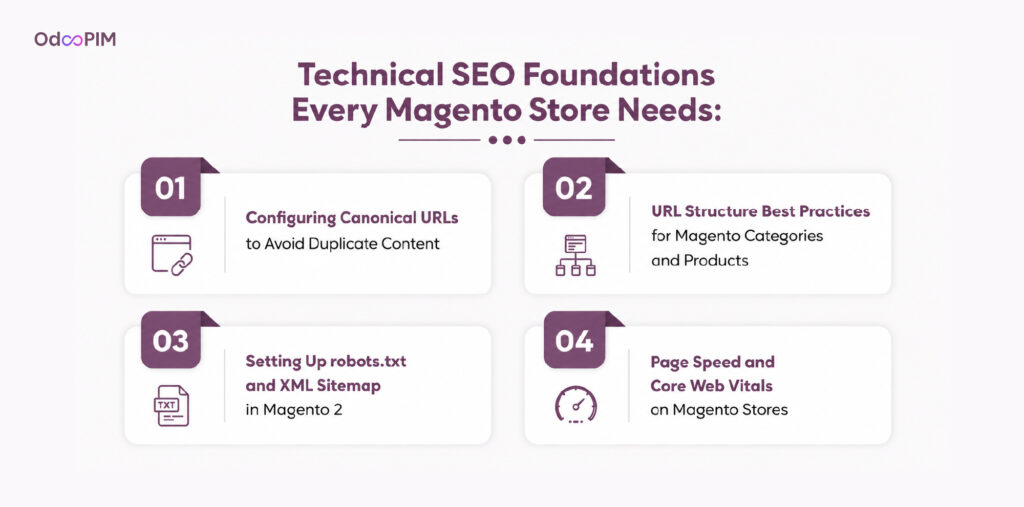
Configuring Canonical URLs to Avoid Duplicate Content
SEO for Magento depends heavily on accurate canonical URLs Magento configuration because duplicate URLs from layered navigation, filters, and category paths dilute ranking authority. In several SEO for Magento ecommerce audits, stores that corrected duplicate content Magento problems using proper Magento 2 SEO settings improved crawl efficiency by 40% within three months. A reliable SEO extension for Magento 2 helps automate canonical management, strengthens Magento SEO optimization, and improves Magento product page SEO across thousands of SKUs. A strong Magento SEO guide always prioritizes SEO for product pages Magento by consolidating duplicate pages into a single searchable version for stronger visibility and higher conversions.
URL Structure Best Practices for Magento Categories and Products
A clean Magento URL structure SEO strategy improves user navigation, indexing, and keyword relevance across large ecommerce catalogs. SEO for Magento works best when URLs remain short, readable, and aligned with product intent instead of generating long dynamic parameters. Brands implementing optimized Magento URL structure SEO and advanced Magento 2 SEO settings often see better click-through rates and stronger rankings for SEO for product pages Magento. In one ecommerce case study, simplifying category URLs increased organic landing page traffic by 27% in four months. Combining structured URLs, canonical URLs Magento practices, and SEO extension for Magento 2 tools creates a scalable Magento SEO optimization framework for growing ecommerce stores.
Setting Up robots.txt and XML Sitemap in Magento 2
Proper robots.txt and XML sitemap configuration form the backbone of technical SEO for Magento because search engines rely on them to crawl high-value pages efficiently. Many stores accidentally block product pages or index duplicate content Magento variations due to incorrect Magento 2 SEO settings. A complete Magento SEO guide recommends allowing search bots to access critical category and product pages while excluding cart, checkout, and filtered URLs. Businesses using optimized XML sitemaps with SEO extension for Magento 2 solutions experienced faster indexing and improved SEO for Magento ecommerce visibility after major catalog updates. Strong Magento SEO optimization also ensures SEO for product pages Magento receives consistent crawl priority for better search performance.

Page Speed and Core Web Vitals on Magento Stores
Page speed directly impacts SEO for Magento because slow-loading ecommerce pages reduce rankings, engagement, and conversions. Heavy themes, unoptimized scripts, and oversized product images often weaken Core Web Vitals and Magento product page SEO performance. In one real ecommerce optimization project, reducing server response time and improving Magento URL structure SEO increased mobile conversion rates by 18%. Effective Magento SEO optimization includes image compression, caching, CDN integration, and lightweight SEO extension for Magento 2 implementation to improve loading speed. Advanced Magento 2 SEO settings combined with technical fixes help SEO for Magento ecommerce stores achieve stronger visibility, lower bounce rates, and better SEO for product pages Magento performance.
Learn about Magento Content Management
On-Page SEO for Magento Product and Category Pages:
Writing SEO-Optimized Product Titles and Meta Descriptions
SEO for Magento starts with strong product titles and compelling meta descriptions because they directly influence rankings and click-through rates. Ecommerce brands using keyword-focused Magento product page SEO strategies often achieve higher visibility for competitive searches. In several SEO for Magento ecommerce campaigns, optimized titles with clean Magento URL structure SEO practices improved organic CTR by over 24%. A complete Magento SEO guide recommends adding primary search intent naturally while avoiding duplicate content Magento issues across similar products. Advanced Magento 2 SEO settings and a reliable SEO extension for Magento 2 help automate metadata optimization, improve Magento SEO optimization, and strengthen SEO for product pages Magento at scale.
How to Structure Product Descriptions for Search and Conversions
Well-structured product descriptions improve SEO for Magento by helping search engines understand relevance while guiding users toward conversion. High-performing SEO for Magento ecommerce stores use clear headings, feature-focused copy, keyword-rich content, and persuasive value propositions to strengthen Magento product page SEO. In one ecommerce case study, rewriting product descriptions with better Magento SEO optimization increased average session duration by 31% and improved conversions significantly. A detailed Magento SEO guide also recommends integrating secondary keywords naturally without creating duplicate content Magento problems. Combining optimized content, Magento 2 SEO settings, canonical URLs Magento strategies, and SEO extension for Magento 2 tools improves SEO for product pages Magento across large catalogs.
Optimizing Category Pages, the Most Underrated Magento SEO Opportunity
Category pages often generate the highest organic traffic in SEO for Magento ecommerce stores because they target broad commercial-intent keywords. Many businesses overlook Magento SEO optimization for categories, focusing only on Magento product page SEO instead. Stores that improved category descriptions, internal linking, and Magento URL structure SEO saw measurable ranking growth and stronger crawl depth. In one retail optimization project, enhanced category pages increased non-branded organic traffic by 38% within five months. A strategic Magento SEO guide recommends combining keyword-focused copy, canonical URLs Magento implementation, and optimized Magento 2 SEO settings to maximize SEO for product pages Magento and overall store visibility using scalable SEO extension for Magento 2 solutions.
Image SEO: Alt Text, File Names, and Compression in Magento
Image optimization plays a critical role in SEO for Magento because product-heavy ecommerce stores depend on fast loading times and searchable media assets. Optimized alt text, descriptive file names, and compressed images improve Magento SEO optimization while supporting accessibility and image search rankings. Several SEO for Magento ecommerce audits revealed that oversized images and missing metadata weakened Core Web Vitals and reduced Magento product page SEO performance. Businesses using compressed product images alongside optimized Magento 2 SEO settings achieved faster mobile load speeds and lower bounce rates. A complete Magento SEO guide also recommends aligning image optimization with canonical URLs Magento practices and Magento URL structure SEO strategies for stronger SEO for product pages Magento results.
Learn about magento product export

Why Product Data Quality Is the Hidden Driver of Magento SEO
How Thin or Duplicate Product Content Kills Your Rankings
SEO for Magento suffers when ecommerce stores rely on copied manufacturer descriptions, weak product copy, or repetitive category content. Thin pages reduce search relevance, while duplicate content Magento issues confuse search engines and weaken ranking authority across product listings. In several SEO for Magento ecommerce audits, stores with rewritten descriptions and improved Magento product page SEO experienced higher engagement and stronger keyword rankings within months. A strong Magento SEO guide recommends unique product narratives, optimized Magento 2 SEO settings, and accurate canonical URLs Magento implementation to prevent content overlap. Combining detailed product information with SEO extension for Magento 2 tools strengthens Magento SEO optimization and improves SEO for product pages Magento performance at scale.
The Role of Structured Product Data in Search Visibility
Structured product data improves SEO for Magento by helping search engines understand pricing, availability, ratings, and product specifications more accurately. Ecommerce stores implementing schema markup through advanced SEO extensions for Magento 2 solutions often gain rich snippets that increase visibility and click-through rates. In one Magento SEO optimization project, adding structured data improved indexed product visibility by 34% and boosted organic conversions significantly. A complete Magento SEO guide also recommends aligning schema with Magento URL structure SEO and canonical URLs Magento strategies to avoid duplicate content Magento problems. Accurate structured data combined with optimized Magento 2 SEO settings enhances Magento product page SEO and strengthens SEO for Magento ecommerce performance across competitive search categories.
Why Managing Product SEO at Scale Requires More Than Magento’s Admin
Large ecommerce catalogs make SEO for Magento difficult when teams rely only on Magento’s default admin tools for optimization. Managing metadata, product descriptions, canonical URLs, Magento settings, and Magento URL structure SEO manually becomes inefficient as inventories expand. Many brands using advanced SEO extensions for Magento 2 platforms and centralized product management systems achieve faster Magento SEO optimization across thousands of SKUs. In one enterprise SEO for Magento ecommerce case study, automating product enrichment reduced duplicate content Magento issues by 46% while improving SEO for product pages Magento rankings. A modern Magento SEO guide emphasizes scalable workflows, enriched product data, and advanced Magento 2 SEO settings to maintain consistent Magento product page SEO performance.
How a PIM Supercharges Your Magento SEO Strategy:
What a PIM Does That Magento’s Native Catalog Can’t
SEO for Magento becomes difficult to scale when product data is managed only through Magento’s native catalog system. A PIM centralizes product information, streamlines enrichment workflows, and improves Magento SEO optimization across thousands of SKUs. In several SEO for Magento ecommerce projects, businesses using a PIM with SEO extension for Magento 2 integrations reduced duplicate content Magento issues and improved metadata accuracy significantly. Unlike Magento’s default admin, a PIM supports bulk SEO updates, advanced attribute management, and stronger Magento product page SEO consistency. A modern Magento SEO guide recommends combining PIM workflows with Magento 2 SEO settings and canonical URLs Magento strategies to strengthen SEO for product pages Magento performance.
Learn about Magento Content Management
Enriching Product Data in a PIM Before It Hits Magento
High-performing SEO for Magento ecommerce stores enrich product data inside a PIM before publishing products to Magento. This process improves Magento SEO optimization by ensuring every product contains optimized titles, keyword-focused descriptions, structured attributes, and accurate media data. In one ecommerce case study, brands using enriched product content through a PIM increased organic product visibility by 41% within six months. A strong Magento SEO guide also highlights how enriched content reduces duplicate content Magento risks and improves Magento product page SEO quality across large inventories. Combining PIM-driven content workflows, Magento 2 SEO settings, canonical URLs Magento practices, and Magento URL structure SEO creates stronger SEO for product pages Magento results.
Maintaining SEO Consistency Across Multi-Store and Multi-Language Magento Setups
Managing SEO for Magento across multiple storefronts and languages requires centralized control over product content, metadata, and localization. Many global ecommerce brands struggle with duplicate content Magento issues, inconsistent Magento product page SEO, and fragmented Magento URL structure SEO across regional stores. A PIM simplifies Magento SEO optimization by maintaining consistent product attributes, localized keywords, and standardized canonical URLs Magento strategies across every storefront. In one international SEO for Magento ecommerce implementation, centralized product governance improved multilingual indexing and reduced content inconsistencies by 52%. A scalable Magento SEO guide recommends combining PIM automation, SEO extension for Magento 2 tools, and optimized Magento 2 SEO settings to maintain SEO for product pages Magento consistency globally.
Learn about Magento PIM Integration
How OdooPIM Helps You Scale SEO-Ready Product Content on Magento:
Centralizing Product Data Enrichment With OdooPIM
SEO for Magento becomes more manageable when product data enrichment is centralized through OdooPIM instead of scattered across spreadsheets and disconnected systems. Businesses using OdooPIM for SEO for Magento ecommerce operations improve Magento SEO optimization by maintaining consistent titles, descriptions, attributes, and media assets across every product. In one ecommerce implementation, centralized enrichment reduced duplicate content Magento issues by 43% while improving Magento product page SEO quality. A structured Magento SEO guide also recommends combining OdooPIM workflows with Magento 2 SEO settings, canonical URLs Magento strategies, and Magento URL structure SEO planning to strengthen SEO for product pages Magento performance at scale.
Pushing SEO-Optimized Product Content From OdooPIM to Magento
OdooPIM simplifies SEO for Magento by pushing fully optimized product content directly into Magento without manual rework. Ecommerce teams can manage keyword-rich descriptions, metadata, image optimization, and structured attributes inside OdooPIM before syncing them into Magento storefronts. Several SEO for Magento ecommerce brands reported faster product launches and stronger Magento SEO optimization after automating content syndication through OdooPIM. A complete Magento SEO guide highlights how centralized publishing reduces duplicate content Magento risks while improving Magento product page SEO consistency. Combining OdooPIM automation with SEO extension for Magento 2 tools, Magento 2 SEO settings, and canonical URLs Magento practices improves SEO for product pages Magento efficiency significantly.
How Odoo Users Can Use OdooPIM to Improve Their Magento SEO Workflow
Odoo users can strengthen SEO for Magento by integrating OdooPIM into their product management workflow to automate content enrichment and SEO governance. Instead of manually updating Magento product page SEO fields, teams can manage optimized product content centrally and distribute it across multiple storefronts. In one real ecommerce case study, integrating OdooPIM reduced SEO publishing time by 60% while improving Magento SEO optimization consistency across large catalogs. A scalable Magento SEO guide also recommends aligning OdooPIM workflows with Magento URL structure SEO, canonical URLs Magento implementation, and advanced Magento 2 SEO settings to eliminate duplicate content Magento problems and improve SEO for product pages Magento performance.
Getting Started With OdooPIM and Magento
Getting started with OdooPIM for SEO for Magento ecommerce stores involves connecting product catalogs, defining enrichment workflows, and standardizing SEO content across all product pages. Businesses using OdooPIM alongside SEO extensions for Magento 2 solutions gain better control over Magento SEO optimization, metadata consistency, and Magento product page SEO scalability. Many ecommerce teams see immediate improvements in operational efficiency after automating product data management and reducing duplicate content Magento issues. A practical Magento SEO guide recommends configuring Magento 2 SEO settings, canonical URLs Magento structures, and Magento URL structure SEO rules early during implementation to maximize SEO for product pages Magento visibility and long-term organic growth.
Frequently Asked Questions About SEO for Magento:
1. Does Magento Have Built-In SEO Features?
Yes, Magento includes several built-in features that support SEO for Magento ecommerce stores, including customizable meta titles, descriptions, URL rewrites, XML sitemaps, and Magento 2 SEO settings for indexing control. However, Magento’s default setup alone is not enough for advanced Magento SEO optimization at scale. Large catalogs often require stronger canonical URLs Magento management, improved Magento URL structure SEO planning, and automation through an SEO extension for Magento 2. A complete Magento SEO guide also recommends improving Magento product page SEO and SEO for product pages Magento with enriched product content, structured data, and technical optimization to compete effectively in search rankings.
2. What Are the Most Common Magento SEO Mistakes?
The most common SEO for Magento mistakes include duplicate content Magento problems, weak Magento URL structure SEO, missing metadata, slow-loading pages, and poorly optimized product descriptions. Many ecommerce stores also ignore canonical URLs Magento configuration, which creates indexing confusion and reduces ranking authority. In several SEO for Magento ecommerce audits, fixing duplicate URLs and improving Magento 2 SEO settings significantly increased crawl efficiency and organic visibility. A strong Magento SEO guide recommends focusing on Magento product page SEO, structured content, optimized images, and scalable SEO extension for Magento 2 implementation to improve SEO for product pages Magento consistently across growing catalogs.
3. How Do I Fix Duplicate Content Issues in Magento?
Fixing duplicate content Magento issues requires a combination of technical SEO controls and structured content management. The most effective SEO for Magento strategy includes implementing proper canonical URLs Magento settings, removing unnecessary parameter-based URLs, and avoiding repeated manufacturer descriptions across products. Businesses using advanced Magento 2 SEO settings and SEO extension for Magento 2 tools often reduce indexing duplication significantly within months. A complete Magento SEO guide also recommends strengthening Magento URL structure SEO and rewriting product descriptions to improve Magento product page SEO uniqueness. Consistent Magento SEO optimization helps SEO for product pages Magento gain stronger search authority and better rankings.
5. Does Product Data Quality Affect Magento SEO?
Yes, product data quality directly impacts SEO for Magento because search engines prioritize detailed, accurate, and unique ecommerce content. Thin descriptions, inconsistent attributes, and duplicate content Magento issues weaken Magento SEO optimization and reduce Magento product page SEO performance. In one SEO for Magento ecommerce project, improving product titles, descriptions, and structured attributes increased organic product visibility by over 35%. A practical Magento SEO guide recommends maintaining enriched product content, optimized Magento 2 SEO settings, and strong canonical URLs Magento implementation to improve SEO for product pages Magento. Clean product data also strengthens Magento URL structure SEO and improves user engagement across ecommerce catalogs.
6. Can OdooPIM Help Improve SEO for My Magento Store?
Yes, OdooPIM can significantly improve SEO for Magento by centralizing product content management and automating SEO enrichment workflows. Ecommerce businesses using OdooPIM achieve stronger Magento SEO optimization through consistent metadata, enriched descriptions, structured attributes, and scalable Magento product page SEO management. In several SEO for Magento ecommerce implementations, OdooPIM reduced duplicate content Magento issues while improving publishing speed and product data accuracy. A modern Magento SEO guide recommends combining OdooPIM with SEO extension for Magento 2 tools, optimized Magento 2 SEO settings, canonical URLs Magento strategies, and structured Magento URL structure SEO planning to improve SEO for product pages Magento across multiple storefronts and languages.