What Is Headless Commerce?
Definition
Headless commerce describes an architecture where the frontend presentation layer and backend commerce engine operate as independent systems communicating exclusively through APIs. The frontend, whether a website, mobile app, smart device, or digital kiosk, requests product data, pricing, and inventory from backend services without any code dependency between the two layers. This separation means developers build any customer experience imaginable without the constraints of a platform’s native templating system or frontend framework. Headless ecommerce transforms the traditional monolithic approach where design changes require backend modifications and vice versa into a clean architectural boundary. The model acknowledges that customer touchpoints multiply faster than any single platform can natively support.
Headless vs Monolithic
Monolithic commerce platforms bundle the storefront, shopping cart, checkout flow, and backend logic into a single coupled application where changing the homepage design means navigating checkout-impacting code. Headless commerce shatters this coupling, letting frontend developers work independently of backend engineers without stepping on each other’s deployment schedules or risk profiles. A monolithic platform forces every customer touchpoint through its native presentation layer; headless architecture enables unlimited frontends consuming the same backend services simultaneously. The headless ecommerce approach eliminates the frustrating trade-off where marketing demands a custom landing page that the monolithic platform simply cannot accommodate. Traditional platforms optimize for deployment of standard storefronts; headless optimizes for complete control over differentiated customer experiences at the cost of greater initial development investment.

How Headless Architecture Works
Presentation Layer
The presentation layer in headless commerce encompasses every customer-facing touchpoint where shoppers interact with your brand, completely liberated from backend constraints. Developers build websites using modern frameworks like React, Vue, or Next.js, mobile apps natively in Swift or Kotlin, and emerging interfaces for voice assistants or IoT devices. This headless architecture front-end consumes commerce data through API calls rather than rendering server-generated pages from a monolithic template engine. Designers achieve pixel-perfect brand experiences without the frustrating workarounds that coupled platforms demand for any deviation from standard layouts. The headless ecommerce presentation layer scales independently, handling traffic surges without backend performance implications because the two systems operate on separate infrastructure.
APIs
APIs form the connective tissue of headless commerce, enabling the presentation layer to request product information, pricing, inventory status, and cart operations from backend services through standardized protocols. REST and GraphQL endpoints expose commerce functionality as discrete services that any frontend can consume regardless of its technology stack or device form factor. This headless architecture communication layer ensures that a single backend simultaneously serves a website, mobile app, wholesale portal, and Amazon integration without duplicating commerce logic. API-first design in headless ecommerce treats integration capability as a core product feature rather than an afterthought bolted onto a monolithic codebase. The quality of API design, response speed, data completeness, endpoint consistency, determines how effectively frontend experiences perform.
Backend Systems
The backend of a headless commerce stack contains business logic that powers transactions: product catalogs, pricing engines, inventory management, cart operations, checkout flows, and order processing. These systems operate independently from any presentation concern, focusing on commerce functionality exposed through well-documented APIs. Headless commerce platforms provide this backend as a service, managing the complex commerce logic while allowing frontend developers to focus exclusively on customer experience. The headless architecture backend connects to ERP, PIM, CRM, and payment gateways through additional API layers, creating a composable ecosystem where each system handles its specialized function. This separation means backend upgrades, security patches, and performance optimizations happen without touching a single line of frontend code.
Learn about What Is CPG? Consumer Packaged Goods Explained

Benefits of Headless Commerce
Flexibility
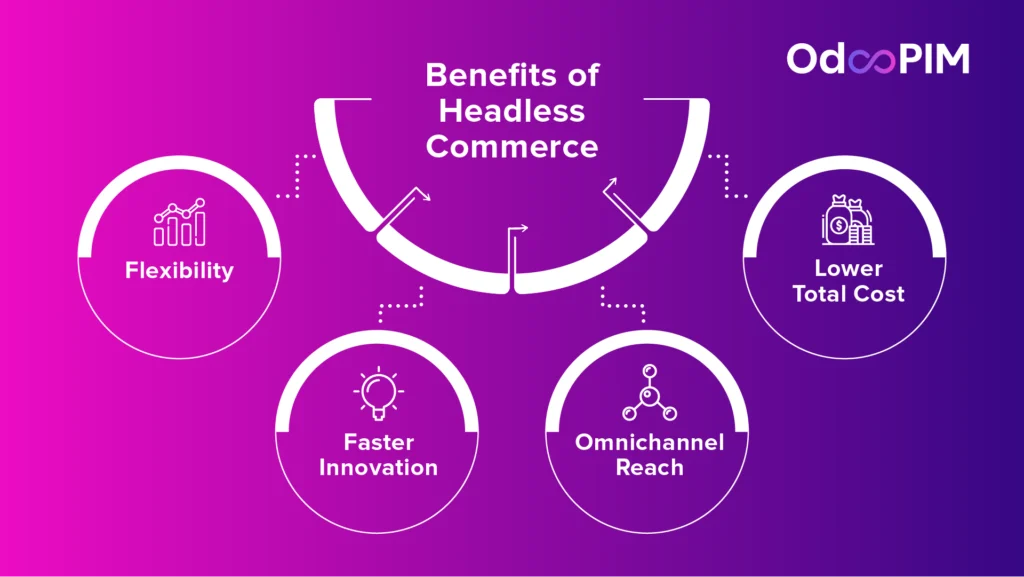
Headless commerce delivers complete creative and functional freedom over every customer touchpoint without the constraints of platform-native templating systems. Developers select any frontend framework, design language, or user experience pattern that serves customer needs rather than accepting what a monolithic platform’s theme engine allows. This headless ecommerce flexibility extends to content management, letting marketers deploy campaigns, landing pages, and product storytelling without developer dependency or platform limitations. Custom checkout flows, unique product configurators, and differentiated browsing experiences become achievable when the presentation layer operates independently. The benefits of headless commerce include the ability to deliver experiences that reflect brand identity rather than platform identity.
Faster Innovation
Decoupling frontend from backend enables parallel development where UX teams iterate on customer experiences while commerce engineers enhance backend functionality without coordination overhead. A headless architecture allows A/B testing new storefront designs, experimenting with emerging touchpoints, and deploying seasonal experiences without risking core commerce stability. Development cycles compress because frontend changes require no backend regression testing and backend updates need no frontend validation. Headless ecommerce teams ship improvements weekly that monolithic competitors schedule quarterly due to the testing burden of coupled systems. The benefits of headless commerce manifest in deployment velocity that translates directly into competitive advantage.
Omnichannel Reach
Headless commerce natively supports channel expansion because the backend commerce services remain channel-agnostic while any frontend touchpoint consumes them through APIs. The same product catalog, pricing logic, and inventory service powers your website, mobile app, wholesale portal, in-store kiosk, and voice commerce interface simultaneously. Adding a new customer touchpoint becomes a frontend development project rather than a platform migration because commerce functionality already exists as consumable services. This headless ecommerce channel flexibility eliminates the painful process of duct-tapping additional channels onto monolithic platforms never designed for omnichannel delivery. The headless architecture grows with your channel strategy rather than constraining which touchpoints you can support.
Lower Total Cost
While headless commerce demands higher initial development investment than launching a templated monolithic storefront, total cost of ownership trends lower over time. Eliminating the expensive customizations required to force monolithic platforms into unique experiences removes the ongoing professional services tax that coupled systems impose. Headless architecture avoids the costly replatforming cycles where businesses rip out commerce stacks because the frontend no longer serves evolving customer expectations. The headless ecommerce model allows component-level replacement where underperforming services get swapped without the capital expenditure of platform migration. The benefits of headless commerce include negotiating leverage with every technology vendor since no single provider controls your complete commerce operation.
Learn about Akeneo vs inRiver vs OdooPIM
Headless Commerce Platforms
Common Features
Headless commerce platforms provide backend commerce functionality exposed through APIs, typically including catalog management, pricing engines, cart operations, checkout processing, and order management. These platforms separate content management from commerce logic, allowing marketers to create experiences without touching transaction systems. API-first design ensures every commerce capability remains accessible to any frontend through documented, versioned endpoints with predictable behavior. Modern headless ecommerce platforms include webhook infrastructure for event-driven architectures where inventory changes, order status updates, and price modifications trigger real-time notifications. The best headless commerce solutions offer SDK libraries that accelerate frontend development while maintaining the architectural benefits of complete decoupling.
What to Look For
Evaluate headless commerce platforms first on API quality, response speed, endpoint completeness, documentation depth, and the developer experience of building against their services. The platform must connect smoothly to your existing ERP, PIM, and payment systems through pre-built connectors or robust integration frameworks rather than demanding custom middleware development. Assess whether the headless ecommerce solution supports your required frontend frameworks and provides SDKs that accelerate development without creating new forms of vendor dependency. Performance under load matters critically since the API layer becomes the bottleneck that determines whether your custom storefront feels responsive or sluggish during traffic peaks. The right headless commerce partner provides commerce functionality without dictating how you present it to customers or which additional components complete your technology stack.

Headless Commerce Examples
B2B Use Case
A manufacturer selling complex industrial equipment through headless commerce delivers a custom quoting interface, customer-specific pricing, and technical configuration tools that no monolithic B2C platform could accommodate. The headless architecture frontend presents engineering-rich product data, compatibility matrices, and bulk ordering workflows that reflect how industrial buyers actually purchase. Backend commerce services handle contract pricing enforcement, approval chain routing, and purchase order processing exposed through APIs that the custom frontend consumes. This headless ecommerce approach serves both authenticated procurement professionals and anonymous researchers through a single backend commerce engine. The headless commerce examples in B2B demonstrate that complex purchasing workflows demand frontend freedom that coupled platforms cannot deliver.
Omnichannel Use Case
A consumer brand runs their D2C website, mobile app, wholesale portal, and in-store kiosks through one headless commerce backend that serves consistent product data and pricing to every touchpoint. The mobile app delivers a scan-and-reorder experience drawing from the same inventory service that powers the website’s checkout flow. In-store kiosks access real-time inventory across locations, letting shoppers browse extended catalogs and place orders for home delivery through the same commerce engine. This headless architecture approach eliminates the channel-specific commerce instances that create data silos and operational complexity in traditional deployments. The headless ecommerce model transforms channel expansion from a multi-platform management challenge into a frontend design exercise.
The Role of Data in a Headless Stack
SKU Sprawl
Headless commerce multiplies the data management challenge as enriched product information must flow through APIs to an ever-growing number of frontend experiences. A catalog of ten thousand SKUs with fifty attributes each generates half a million data points requiring consistency across websites, apps, portals, and kiosks. The headless architecture promise of omnichannel flexibility breaks down when product data feeding those channels lacks governance and completeness. Headless ecommerce success demands a centralized product data layer that ensures every API response delivers accurate, enriched, and consistent information regardless of which frontend requests it. SKU sprawl without data governance turns headless flexibility into a liability where channels display conflicting product information.
Channel Inconsistency
The very flexibility that makes headless commerce powerful creates vulnerability when product data lacks centralized governance and consistent formatting. A product description optimized for the website might display awkwardly on a mobile app, while technical specifications required by the wholesale portal go missing from the D2C experience. Headless architecture without a unified data source allows product information to drift across channels as each frontend team interprets and formats data differently. The headless ecommerce data challenge intensifies as channels proliferate because every touchpoint needs complete, accurate product content formatted appropriately for its context. Brand consistency across the headless commerce ecosystem depends on product data quality before it reaches any presentation layer.
Why Product Data Needs to Be API-Ready
Every frontend in a headless commerce stack consumes product data through API calls, demanding that product information lives in a system designed for programmatic access rather than manual editing. Spreadsheets and disconnected databases cannot deliver the structured, enriched, and consistently formatted data that headless architecture APIs require for real-time responses. Product data must carry complete attributes, channel-appropriate media, and compliance documentation before APIs can serve it to customer-facing experiences. Headless ecommerce performance depends on data readiness because slow or incomplete API responses degrade the custom frontend experiences that justified the headless investment. The headless commerce model treats product data as a service that must be as reliable and performant as the commerce engine itself.
Headless PIM: The Data Layer Behind Headless Commerce
What Headless PIM Means
A headless PIM provides product information management where the data repository and administration interface operate independently from any presentation layer, exposing enriched product content through APIs. This architecture mirrors headless commerce principles applied to product data: centralized governance with unlimited flexibility in how and where that data gets consumed. The headless commerce stack gains a dedicated product data service that delivers complete, validated product information to every frontend, search index, and syndication endpoint through standardized API calls. Administrative users manage enrichment workflows in the PIM interface while frontend developers pull product data through the same API-first approach they use for commerce services. The headless ecommerce data layer ensures product information receives specialized governance without constraining how frontends present it to customers.
Native ERP Connection
A headless PIM connected natively to ERP systems eliminates the synchronization failures that plague middleware-dependent product data flows between business systems and commerce frontends. Inventory levels, pricing updates, and product changes flow from the ERP through the PIM to every headless commerce frontend in real time without data mapping delays. This native connection ensures that the API responses powering customer experiences always reflect current product truth rather than outdated snapshots from periodic batch syncs. The headless architecture benefits from ERP-native PIM deployment where product data governance and business system integration happen within the same platform ecosystem. Headless ecommerce operations gain the speed of decoupled frontends with the reliability of tightly integrated backend data, eliminating the trade-off between flexibility and accuracy.

FAQ
1. What does “headless” mean in headless commerce?
The “headless” concept in headless commerce refers to severing the frontend presentation layer, the website, mobile app, or any customer-facing interface, from the backend commerce engine that handles transactions. Think of the “head” as everything customers see and interact with, while the “body” contains all the business logic powering those experiences behind the scenes. This headless architecture means the two layers communicate exclusively through APIs without any direct code dependency binding them together. Developers build any customer experience imaginable without touching the checkout logic, inventory management, or pricing engines running in the background. Headless ecommerce replaces the rigid coupling of traditional platforms where frontend design and backend functionality remain locked together in a single codebase.
2. How is headless commerce different from traditional ecommerce?
Traditional ecommerce platforms bundle the storefront, cart, checkout, and backend into one tightly coupled application where changing the homepage design means navigating code that also handles payment processing. Headless commerce separates these layers completely, letting frontend developers build custom experiences independently while backend engineers enhance commerce logic without coordination overhead. A traditional platform forces every customer touchpoint through its native templating system, while headless architecture enables unlimited frontends consuming the same backend services simultaneously. The benefits of headless commerce include launching new customer experiences without the regression testing burden that coupled systems impose. Headless ecommerce platforms trade the convenience of pre-built storefronts for complete creative and functional control over every customer touchpoint.
3. What is headless PIM?
A headless PIM applies the same decoupling principle to product information management, operating as a backend data repository that exposes enriched product content through APIs without dictating how that data gets displayed. The administration interface handles enrichment workflows, data governance, and attribute management while any frontend, website, mobile app, marketplace listing, distributor portal, consumes product information through standardized API calls. This architecture mirrors headless commerce design patterns, treating product data as a service available to unlimited consuming applications. The headless PIM ensures consistent product information feeds every customer touchpoint without constraining how each channel presents that data. Product data governance remains centralized while data consumption remains infinitely flexible.
4. What are the main benefits of headless commerce?
The primary benefits of headless commerce start with complete creative freedom over customer experiences, liberated from the templated storefronts that monolithic platforms impose. Development velocity accelerates because frontend and backend teams work independently, shipping improvements without the regression testing burden of coupled systems. Omnichannel reach expands natively as the same backend commerce services power websites, mobile apps, wholesale portals, and IoT devices simultaneously through APIs. Headless architecture allows component-level technology replacement where underperforming services get swapped without full platform migration. Total cost of ownership trends lower over time by eliminating the expensive customizations and costly replatforming cycles that traditional headless ecommerce deployments avoid entirely.
5. Is headless commerce the same as composable commerce?
Headless commerce and composable commerce share architectural DNA but operate at different scopes, headless specifically decouples the frontend from the backend, while composable extends this principle across the technology stack. Headless commerce addresses the separation between presentation and commerce logic, ensuring any frontend can consume backend services through APIs. Composable commerce decomposes the backend itself into independent, swappable components where cart, search, pricing, and content management each operate as distinct services. Headless architecture provides frontend freedom; composable provides complete architectural freedom across every commerce function. The headless commerce platforms represent one dimension of a broader composable strategy that treats every capability as an independent, interchangeable building block.