What Are PIM and DAM Solutions?
What a PIM System Does
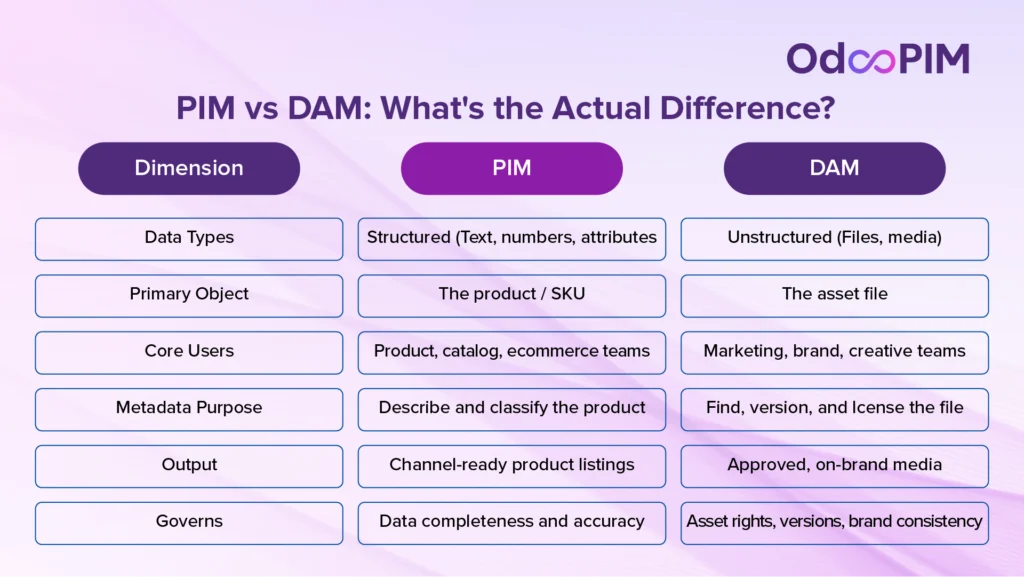
A PIM system governs structured product data, SKU identifiers, technical specifications, dimensional attributes, marketing descriptions, pricing references, and channel-specific variants, that define what a product is. The platform centralizes this information from ERPs, supplier feeds, and spreadsheets into one governed repository where teams enrich and validate content before syndication. A PIM enforces data completeness standards that prevent incomplete product records from reaching customer-facing channels. The system serves as the authoritative record for commercial product truth across sales and marketing touchpoints. OdooPIM delivers these PIM DAM solutions capabilities natively within the Odoo ERP framework, managing structured product data on the same database as inventory, pricing, and procurement.
What a DAM System Does
A DAM system governs unstructured digital assets, product photography, marketing videos, 360-degree product spins, CAD files, specification sheets, and packaging artwork, that show what a product looks like. The platform provides metadata tagging, version control, and access permissions ensuring teams find and use only current, approved assets. A DAM eliminates the shared-drive chaos where multiple versions of product images exist without clear approval status. Creative teams, brand managers, and marketing departments rely on DAM for governed visual content across campaigns and channels. Understanding the difference between PIM and DAM means recognizing that while PIM handles product attributes, DAM handles the rich media that brings those attributes to life visually.
Why They Get Confused
PIM and DAM systems claim to provide a single source of truth for product-related content, creating genuine confusion for organizations evaluating which platform they need. Both platforms use metadata extensively, PIM applies it to product attributes while DAM applies it to asset files. Both feed ecommerce platforms, with PIM delivering product descriptions and specifications while DAM delivers product imagery and video. The overlap intensifies as modern PIM platforms include lightweight asset storage and DAM platforms market product-first features. OdooPIM resolves this confusion by delivering a unified PIM DAM system that manages structured product data and digital assets without the artificial separation that creates the PIM vs DAM debate.
Learn about Product information management guide.

PIM vs DAM: What’s the Actual Difference?
Where the Two Overlap
Modern PIM platforms increasingly include lightweight asset storage for product images, while DAM platforms market product-first features that blur the PIM vs DAM boundary. This overlap causes evaluation paralysis where organizations cannot determine whether they need one platform, both platforms, or a converged solution. The overlap is real, both systems manage metadata, serve ecommerce channels, and claim to provide product content governance. PIM DAM integration becomes the practical answer, connecting specialized systems through APIs or, more efficiently, deploying a unified PIM DAM system that handles both data types natively. OdooPIM eliminates the overlap confusion by providing governed product data and digital asset management within one platform sharing Odoo’s data model.
How Does PIM and DAM Integration Work?
The Link Is the SKU
The fundamental connection between PIM and DAM systems is the SKU, the product identifier that links structured product data in the PIM to visual assets in the DAM. One product record can reference many assets, hero shots, lifestyle images, specification drawings, installation videos, while a single asset can serve multiple product variants. This many-to-many relationship is the most under-explained concept in PIM DAM integration, yet it determines whether product pages display complete, consistent content. The PIM holds asset references rather than the files themselves, creating a governed link between product truth and visual truth. OdooPIM manages this asset-to-SKU relationship natively, eliminating the brittle reference links that break in disconnected PIM DAM solutions.
What a Working Integration Looks Like
A functional PIM DAM integration follows a defined flow: assets upload to the DAM, receive metadata tagging, pass through approval workflows, link to specific product records, and syndicate alongside product data to every channel. The integrated system pushes product images to Shopify alongside descriptions, to Amazon alongside specifications, and to print catalogs alongside technical data. When marketing approves new product photography, that approval triggers automated syndication where updated assets reach every channel simultaneously. PIM DAM system integration ensures that the right product imagery accompanies the right product data without manual coordination. OdooPIM streamlines this workflow by managing both product data enrichment and asset approval within a single governed environment.
Where Integrations Break
Disconnected PIM DAM solutions fail in predictable ways: broken asset URLs where product pages display missing image placeholders, wrong images attached to wrong product variants, approved assets that never reached the channel due to synchronization failures. Duplicate asset uploads accumulate when teams cannot find existing approved imagery, consuming storage and creating version confusion. Missing version control means outdated product images remain visible on live channels long after marketing approved replacements. These PIM DAM integration failures occur silently, with customers encountering the errors before internal teams detect them. OdooPIM eliminates these failure modes by storing assets and product data in the same database, removing the synchronization layer where disconnections occur.
Learn about best PIM software.
Do You Need a PIM, a DAM, or Both?
When a PIM Alone Is Enough
A PIM alone suffices when product catalogs carry few visual assets per SKU and those assets rarely change after initial upload. Organizations without creative production teams or complex image requirements find standalone PIM meets their needs. Simple product lines with one or two images per SKU do not demand the asset management that DAM provides. PIM DAM solutions evaluation should start with honest assessment of visual content complexity. OdooPIM serves these organizations with native asset management capabilities that handle straightforward product imagery without requiring a separate DAM.
When a DAM Alone Is Enough
Brand-led organizations with heavy creative output, fashion, beauty, luxury goods, but small, stable product catalogs may find DAM alone sufficient for their immediate needs. These businesses prioritize visual storytelling and campaign asset management over complex product data governance. The PIM vs DAM decision tilts toward DAM when creative production volume exceeds product data complexity. However, catalog growth and channel expansion inevitably push these organizations toward needing both capabilities. OdooPIM accommodates growing businesses by providing PIM and asset management in one platform, eliminating the need to add a separate PIM later.
When You Need Both
Organizations managing high SKU counts with multiple assets per product across multiple sales channels require both PIM and DAM systems working in concert. The threshold mostly arrives when catalogs exceed a few thousand SKUs, each product carries more than five visual assets, and those assets must reach three or more channels. PIM DAM integration becomes essential rather than optional at this complexity level because manual coordination between separate systems becomes mathematically impossible. The difference between PIM and DAM matters less than how tightly they integrate. OdooPIM provides the unified PIM DAM system that eliminates the integration threshold entirely.
The Third Option: One Platform, Both Capabilities
A single-vendor platform providing both PIM and DAM capabilities offers fewer integration points, one data model, and simplified governance compared to connecting separate systems. The trade-off is typically lighter creative workflow features than a dedicated DAM optimized for high-volume creative production. Organizations must evaluate whether the operational simplicity of a unified PIM DAM system outweighs the specialized capabilities of best-of-breed separate platforms. OdooPIM delivers this unified approach natively, managing product data and digital assets within one Odoo environment where both capabilities share the same database and governance framework. The platform provides the complete PIM DAM solutions that mid-market ecommerce businesses and multichannel sellers require.
Learn about Product Master Data Management

The Hidden Cost of Running PIM and DAM as Separate Systems
The Integration Tax
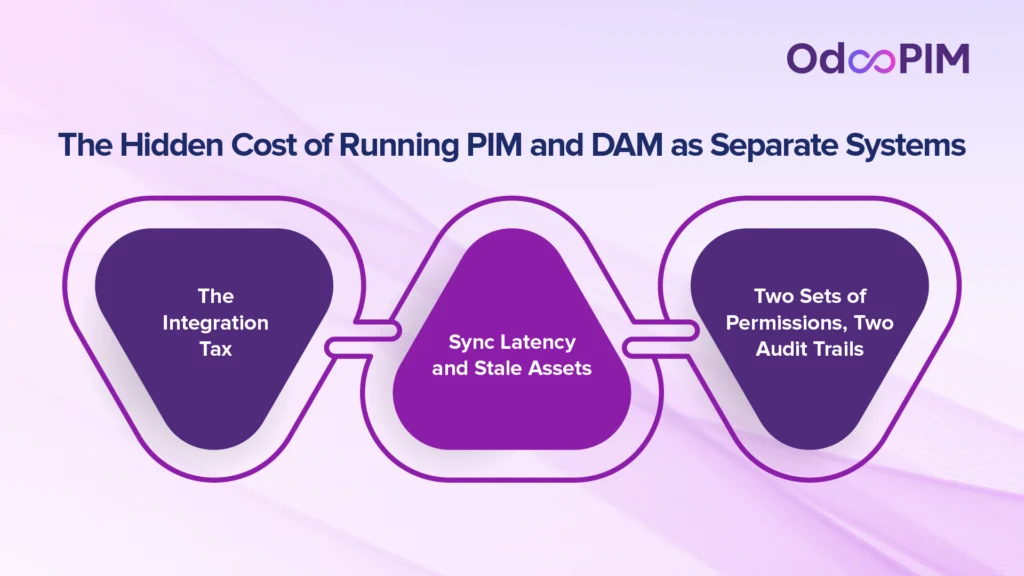
Running separate PIM and DAM systems imposes an integration tax encompassing connector licensing fees, middleware subscriptions, synchronization monitoring tools, and the ongoing re-mapping required when either platform upgrades. Each connected system introduces a recurring operational cost invisible in initial license comparisons. PIM DAM integration through middleware demands dedicated ownership, someone must monitor pipeline health, troubleshoot failures, and update mappings. Ask any vendor whether the integration syncs in real time or on a schedule, and who owns the connector when it breaks. OdooPIM eliminates this integration tax by providing PIM and asset management within the same platform.
Sync Latency and Stale Assets
When separate PIM DAM solutions synchronize on scheduled intervals, a window opens where the DAM contains updated approved imagery but the PIM still references previous versions. During this staleness window, channels display outdated product images alongside current product data, creating the disjointed customer experience. The cached reference in the PIM does not reflect the DAM’s current state until the next synchronization cycle. PIM DAM system disconnection means marketing approvals in the DAM do not guarantee channel updates. OdooPIM eliminates sync latency by storing assets and product data in the same database, ensuring that approvals take effect immediately.
Two Sets of Permissions, Two Audit Trails
Managing separate PIM and DAM systems means maintaining two user permission structures, two access control frameworks, and two audit trails tracking who changed what and when. Governance fragmentation complicates compliance reporting and increases the administrative burden on teams managing both platforms. When a product page displays incorrect information, determining whether the error originated in PIM data or DAM assets requires investigating two separate systems. PIM DAM integration governance requires coordination across platform boundaries. OdooPIM unifies permissions and audit trails within one Odoo environment, simplifying governance across product data and digital assets.
Learn about PIM vs ERP
How to Evaluate PIM DAM Solutions: A Buyer’s Checklist
Asset-to-SKU Linking at Variant Level, Not Just Parent Product
The important evaluation criterion for PIM DAM solutions is whether the platform links digital assets to specific product variants rather than only to parent products. A red sweater in size medium requires a different product image than the same sweater in blue, and customers expect to see the correct variant image when they select their options. Generic PIM and DAM systems that only link assets at the parent level force manual workarounds that break when variant counts scale. OdooPIM manages asset-to-variant linking natively within its PIM DAM system, ensuring every product variation displays the correct imagery without manual coordination. This variant-level precision directly impacts conversion rates because customers who see accurate product images purchase with greater confidence.
Bulk Asset Re-Linking When SKUs Are Restructured
Product catalogs evolve constantly, SKUs merge, split, get reclassified, or migrate between categories, and your PIM DAM integration must handle these structural changes without breaking every asset relationship. A PIM DAM system that requires manual re-linking of assets after catalog restructuring consumes team capacity that should be directed toward enrichment and channel optimization. Bulk re-linking capabilities allow teams to update asset associations across hundreds of products simultaneously when organizational changes occur. The difference between PIM and DAM functionality matters here because PIM platforms manage product relationships while DAM platforms manage asset files, and only integrated systems handle both. OdooPIM enables bulk asset re-linking directly within its unified platform, eliminating the manual effort that disconnected PIM DAM solutions demand during catalog restructuring.
Renditions and Channel-Specific Image Sizing on the Fly
Every sales channel demands different image dimensions, resolutions, and file formats, Amazon requires specific product image sizes, a B2B portal needs high-resolution technical drawings, and a mobile app demands compressed thumbnails. PIM DAM solutions must generate these channel-specific renditions automatically from master assets rather than requiring creative teams to manually export each size variant. The platform should resize, reformat, and optimize images on the fly as they syndicate to different channels. OdooPIM handles rendition generation within its PIM DAM system, ensuring that each channel receives properly formatted product imagery without manual export processes. This automated rendition capability eliminates the repetitive image processing that consumes creative team hours in organizations using separate PIM and DAM systems.
Asset Rights, Expiry Dates, and Usage Restrictions
Digital assets carry legal and contractual constraints, image licenses expire, usage rights restrict distribution to specific channels, and supplier-provided photography often comes with time-limited permissions. Your PIM DAM integration must track these rights, enforce usage restrictions automatically, and flag assets approaching expiration before they create legal exposure. A PIM DAM system that ignores rights management exposes your organization to copyright claims and supplier disputes when expired assets remain on live channels. OdooPIM includes asset rights management within its unified platform, tracking expiration dates and usage restrictions alongside product data governance. This integrated approach ensures that PIM DAM solutions protect your business from the legal risks that disconnected systems overlook.
Approval Workflows Spanning Both Product Data and Assets
Product content governance requires coordinated approval of structured product data and visual assets before either reaches customer-facing channels. PIM and DAM systems that maintain separate approval workflows create the scenario where marketing approves updated product descriptions while outdated imagery awaits creative team approval in a different system. The difference between PIM and DAM approval processes fragments content governance when these workflows operate independently. OdooPIM provides unified approval workflows within its PIM DAM system, ensuring that product data and associated assets receive coordinated review before syndication. This integrated governance eliminates the approval gaps that cause incomplete or inconsistent product content reaching channels.
Real-Time (Not Batch) Sync Between Systems
The most important technical question for PIM DAM solutions evaluation is whether data synchronization happens in real time or on scheduled batch intervals. Batch synchronization creates staleness windows where the DAM contains updated approved imagery but channels still display previous versions because the PIM has not yet refreshed its asset references. The PIM DAM integration that operates on scheduled syncs guarantees that some percentage of customer visits will encounter outdated product content. OdooPIM eliminates this question entirely by storing product data and digital assets in the same database, removing the synchronization layer that creates staleness in separate PIM and DAM systems. Real-time access to assets and product data is inherent in the architecture rather than a feature requiring configuration.
Native ERP Connection for Pricing and Inventory Context
Product content gains commercial value when connected to operational data, current pricing, available inventory, and procurement status, that turns static product descriptions into purchasable offerings. PIM DAM solutions that lack native ERP connectivity display product content without the commercial context customers need to complete purchases. The difference between PIM and DAM capabilities becomes irrelevant when neither system connects to the operational data that drives commerce. OdooPIM operates within the Odoo ERP framework, connecting product data and digital assets to real-time pricing, inventory levels, and customer-specific information. This native ERP connection transforms the PIM DAM system from a content management tool into a commerce-enabling platform.
Total Cost Including Connectors, Middleware, and Maintenance
Evaluate the fully loaded cost of PIM DAM integration beyond license fees to include connector subscriptions, middleware licensing, implementation development, ongoing maintenance, and the internal resources required for synchronization monitoring. The PIM vs DAM decision mostly focuses on feature comparison while ignoring the integration tax that separate platforms impose. OdooPIM eliminates these hidden costs by providing PIM and digital asset management within one Odoo platform, removing the connectors, middleware, and maintenance that separate PIM and DAM systems demand. Calculate five-year total cost across PIM DAM solutions being evaluated, including the operational burden of maintaining integrations through platform upgrades. The platform with the lowest license fees often carries the highest total cost when integration complexity enters the calculation.

Simplifying Product Data and Digital Assets with OdooPIM
One Database for Product Data and Assets
OdooPIM delivers a unified PIM DAM system built natively on the Odoo ERP framework, where product data, digital assets, inventory, and pricing live in one database without any integration layers. Product attributes, technical specifications, marketing descriptions, and associated imagery exist in the same governed environment, eliminating the artificial separation that defines the PIM vs DAM debate. This native architecture means teams manage structured product information and visual content within the platform they already use for daily operations. The difference between PIM and DAM disappears when both capabilities share a common data model and governance framework. OdooPIM provides complete PIM DAM solutions that treat product data and digital assets as complementary components of the same product record.
No Connector Dependency
Asset-to-SKU relationships in OdooPIM do not depend on a connector staying healthy because the PIM and asset management capabilities share the same database within the Odoo framework. There is no middleware to maintain, no synchronization jobs to monitor, and no integration failure points where product data and visual assets drift apart. This architecture eliminates the PIM DAM integration tax that separate platforms impose through connector licensing, middleware subscriptions, and ongoing synchronization maintenance. When product records update, associated digital assets reflect those changes immediately because they exist in the same governed environment. OdooPIM removes the operational risk that defines disconnected PIM and DAM systems, where broken integrations silently corrupt the customer experience.
Built for Mid-Market Commerce
OdooPIM serves mid-market ecommerce businesses and multichannel sellers already running or considering Odoo who need complete PIM DAM solutions without the complexity and cost of separate platforms. The platform provides the governed product data management and digital asset capabilities that growing commerce operations require, scaled appropriately for organizations that need functionality without enterprise complexity. For teams evaluating PIM vs DAM options and discovering that they actually need both, OdooPIM delivers unified capabilities that simplify the technology stack while strengthening product content governance. The platform transforms product data and asset management from an integration architecture challenge into a single-platform capability accessible to every team.
See how OdooPIM unifies your product data and digital assets in one platform. Watch Demo

FAQ
1. What is the difference between PIM and DAM solutions?
The fundamental PIM vs DAM distinction separates structured product data from unstructured rich media assets within the commerce technology stack. A PIM governs product attributes, technical specifications, marketing descriptions, and category relationships that answer what a product is and why customers should purchase it. A DAM governs creative files, product photographs, marketing videos, logos, CAD drawings, and brand assets, that answer what a product looks like across every customer touchpoint. OdooPIM eliminates this PIM DAM system distinction by providing both capabilities within one Odoo platform where product data and digital assets share the same database and governance framework.
2. Can a PIM system replace a DAM system?
A PIM cannot effectively replace a DAM because these PIM and DAM systems govern different content types with distinct metadata structures, user workflows, and syndication requirements. PIM platforms handle structured product data with defined attributes and validation rules, while DAM platforms manage creative files requiring specialized metadata tagging, version control, and format conversion capabilities. The PIM DAM integration approach recognizes that these systems complement rather than replace each other. OdooPIM resolves this limitation by delivering a unified PIM DAM system with native asset management capabilities alongside governed product data, eliminating the need for separate platforms.
3. How do PIM and DAM systems integrate?
PIM DAM integration establishes direct links between product records in the PIM and approved visual assets in the DAM through the SKU identifier, creating a governed connection between what a product is and what it looks like. The integration mostly connects through APIs that allow the PIM to reference DAM asset IDs, enabling automated syndication where the right images travel with product data to every channel simultaneously. Middleware-dependent integration introduces synchronization risks where asset-to-product links can break silently when either platform updates. OdooPIM eliminates these integration failure points by managing product data and digital assets within a single PIM DAM system sharing one database.
4. Do I need both a PIM and a DAM?
Organizations managing high SKU counts with multiple visual assets per product across multiple sales channels typically need PIM and DAM systems working together to deliver complete product experiences. A PIM without DAM creates product pages with accurate specifications but inconsistent, outdated, or missing product imagery that undermines conversion rates. DAM without PIM produces beautiful visual content attached to product records that may carry incomplete, conflicting, or inaccurate technical information. OdooPIM transforms the PIM vs DAM decision from an either-or choice into a single-platform solution, providing product data governance and digital asset management within the Odoo framework.
5. What should I look for in a PIM DAM solution?
Evaluating PIM DAM solutions first on asset-to-SKU linking precision, the platform must connect digital assets to specific product variants, not just parent products, ensuring customers see accurate imagery for every option they select. The system must provide native ERP connection for real-time pricing and inventory context, transforming static product content into purchasable offerings with current commercial information. Real-time synchronization between product data and assets eliminates the staleness windows that batch-synced PIM DAM integration creates. OdooPIM delivers these capabilities within a unified PIM DAM system built natively on the Odoo framework, eliminating the connectors, middleware, and maintenance costs that separate PIM and DAM systems demand.