What is Product Information Management (PIM)?
PIM software empowers businesses to manage complex product catalogs efficiently. Investing in the best PIM software helps users maintain consistency across sales channels. Leading product information management companies design their solutions to automate workflows and enhance data quality. Selecting the best PIM tools enables faster time-to-market and customer experiences. A powerful PIM solution transforms information into a commerce asset.
The 10 Best PIM Software for 2026
Selecting a platform from a leading product information management company is a strategic decision. This guide analyzes the top contenders, evaluating their strengths to help you identify the definitive Best PIM software for your operational needs.
1. OdooPIM
OdooPIM is natively built within the comprehensive, open-source Odoo ERP suite, but can also work as a standalone module or be integrated with other ERPs, and a host of storefronts.
Best for: SMBs, businesses already using or planning to adopt Odoo, or those looking for a cost-effective PIM.
Key features:
- Integration with other Odoo apps (inventory, sales, website).
- AI product data enrichment to work faster
- Product data management to eliminate data silos.
- Affordable pricing.
Pros / Cons: (+) Unbeatable cost and integration within the Odoo suite.
Pricing: The OdooPIM app is a one-time cost.

2. Akeneo
A market-leading, open-source platform renowned for its community and enterprise-grade flexibility.
Best for: Mid-market to large enterprises seeking a scalable solution with ecosystem support.
Key features:
- Powerful product data modeling and validation.
- Strong marketplace and channel syndication connectors.
- Excellent digital asset management (DAM) integration.
Pros / Cons: (+) Extensive feature set, strong community & partnerships. (-) Enterprise plans can be costly; open-source versions require self-hosting.
Pricing: Freemium open-source edition. Paid SaaS plans start upon request.
3. Salsify
A commerce, SaaS-native platform engineered for dominating digital shelf presence.
Best for: Brand manufacturers and distributors who prioritize winning on retailer sites like Amazon, Walmart, and Target.
Key features:
- Unmatched digital shelf analytics and insights.
- Deep, pre-built integrations with major retailers.
- Strong content creation and optimization tools.
Pros / Cons: (+) Best-in-class for retailer compliance and syndication. (-) Premium pricing; less ideal for simple internal catalog management.
Pricing: Contact for quote.
Learn more about PIM for retailer.
4. Pimcore
An open-core platform that combines PIM, DAM, and CMS in a data hub.
Best for: Organizations with complex data models and those needing a platform beyond just PIM.
Key features:
- Unparalleled data model flexibility and customization.
- Integrated DAM and web content management.
- Truly agnostic omnichannel publishing.
Pros / Cons: (+) “One platform” approach reduces tech stack complexity. (-) High technical overhead; requires significant developer resources.
Pricing: Free open-source community edition. Paid enterprise licenses and support packages available.
Learn more about OdooPIM vs Pimcore.
5. InRiver
A cloud-native solution built around a compelling “product story” methodology for rich marketing content.
Best for: Marketing-driven brands that focus on storytelling, seasonal campaigns, and converting product information into engaging narratives.
Key features:
- Unique “Marketing Model” for structuring promotional content.
- Visual workflow and planning calendar.
- Strong integration capabilities with CMS and e-commerce platforms.
Pros / Cons: (+) Excellent for marketing and content teams. (-) Less focused on heavy technical data or complex B2B scenarios.
Pricing: Contact for quote.
6. Catsy
A PIM tool built for the detailed needs of manufacturers, wholesalers, and B2B companies.
Best for: Businesses that rely on technical specifications, automated spec sheet generation, and distributor portal syndication.
Key features:
- Industry automated spec sheet and line sheet creation.
- Robust supplier data management portals.
- Powerful image editing and digital asset management tools.
Pros / Cons: (+) Unbeatable for technical product data and B2B workflows. (-) Less emphasis on B2C digital shelf analytics.
Pricing: Tiered plans based on features and data volume; contact for details.
7. Plytix
A user-friendly, cloud-based PIM designed for SMBs and growing brands to centralize product data affordably.
Best for: Small to medium businesses and DTC brands needing an intuitive, quick-to-launch solution without a large budget.
Key features:
- Extremely intuitive and clean user interface.
- Simple but effective digital asset management.
- Straightforward channel exports and feed management.
Pros / Cons: (+) Exceptional ease of use and value for money. (-) May lack the depth and scalability required by large enterprises.
Pricing: Free plan available. Paid plans start at a low monthly fee per user.
PIM makes a single, trusted source of product information available for multichannel commerce and data exchange.
– Gartner
8. Sales Layer
A SaaS PIM focusing on automation, data quality, and multichannel publishing.
Best for: Companies aiming to automate product data workflows, improve data quality, and speed up time-to-market across channels.
Key features:
- Strong data import and enrichment automation tools.
- Built-in data quality validation and error detection.
- Efficient editing and publishing.
Pros / Cons: (+) Strong automation and data governance focus. (-) Customization options are limited compared to open-core solutions.
Pricing: Tiered plans based on SKU count; contact for quote.
9. Bluestone PIM
A highly customizable, scalable PIM platform often chosen by large enterprises with unique processes.
Best for: Large organizations in manufacturing, distribution, or retail that require deep customization and complex workflow automation.
Key features:
- Highly flexible data modeling and workflow engine.
- Strong B2B and dealer portal capabilities.
- Deep ERP and legacy system integration expertise.
Pros / Cons: (+) Handles extreme complexity and scale. (-) Implementation can be lengthy and resource-intensive.
Pricing: Enterprise-level; contact for quote.
10. Jasper PIM
An API-first PIM solution built for integration within a commerce tech stack.
Best for: Tech-savvy companies and agencies that prioritize API connectivity, commerce architectures, and system agility.
Key features:
- API architecture for headless implementations.
- Flexible data model with user interface.
- Data synchronization capabilities.
Pros / Cons: (+) Ideal for composable commerce stacks. (-) Smaller market presence compared to giants like Akeneo or Salsify.
Pricing: Based on a combination of SKUs and API calls; contact for details.
learn about PIM requirement
Key Benefits of PIM for US Businesses
1. Everything in One Place
No more digging through spreadsheets or chasing down multiple sources. With PIM, your team has a single source of truth, so everyone from marketing to sales works with the right information.
2. Save Time and Reduce Errors
Manual data entry is not only time-consuming it’s error-prone. PIM automates updates across all your channels, so your product info is always correct and consistent, reducing costly mistakes.
3. Faster Product Launches
Time-to-market matters in the US. With PIM, you can launch new products faster because enriched, organized data is ready to go.
4. Better Customer Experience
Customers notice inconsistencies. Accurate product data builds trust, reduces returns, and improves overall satisfaction, keeping shoppers coming back.
How to Choose the Right PIM Software
Selecting the Best PIM software is a strategic decision that demands an evaluation of your operational realities. This framework moves beyond features to focus on the factors that separate adequate from exceptional PIM tools.
1. Assess Your Data Complexity
Begin with an audit of your product information. Simple SKUs with attributes require a different tool than configurable products with thousands of specifications. The best PIM solutions are architected to handle your data model without creating overhead or failing under scale.
2. Map Your Sales Channels
If you sell on Shopify, prioritize the best PIM for Shopify with integration. A presence across dozens of marketplaces, distributor portals, and B2B platforms demands a Top PIM solution with syndication tools. The Best PIM software acts as the central hub for content requirements.
3. Evaluate ERP Dependency
If sync for inventory, pricing, and orders is important, you need the best PIM systems with connectors to your ERP. A weak link here creates manual work and data errors, eroding the value of your investment in PIM tools.
4. Define Budget and Customization Scope
Open-source PIM software offers flexibility but carries internal development costs. PIM solutions provide speed and reliability, but within their defined framework. The best PIM tools from leading product information management companies offer the right balance of function and adaptable architecture for your budget and IT capacity.
Why OdooPIM is a Strong Choice in 2026
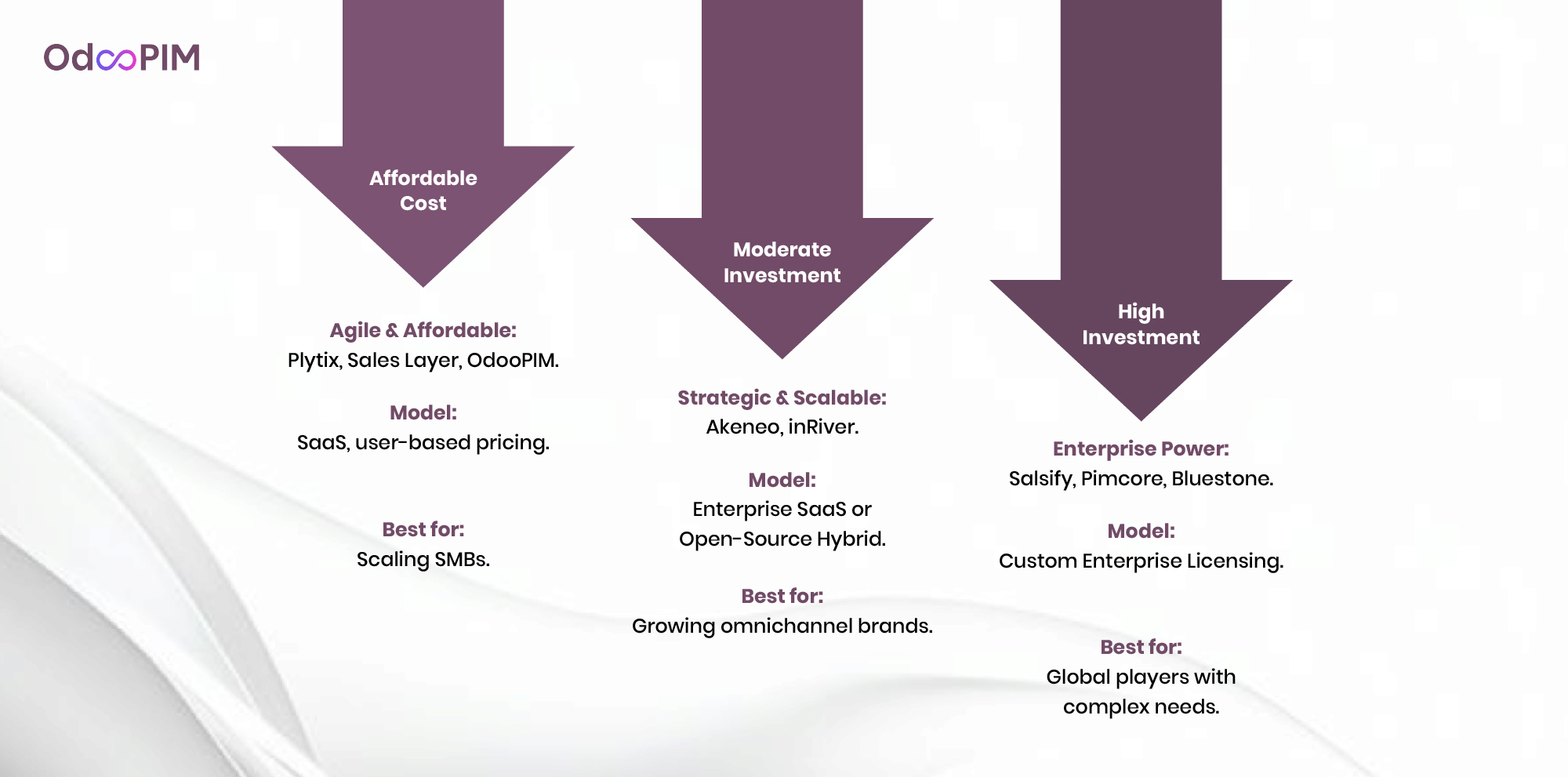
OdooPIM stands out among PIM tools in the market as the operational nucleus for businesses committed to the Odoo ecosystem. It establishes a source of truth that unifies product data with the other business functions, from manufacturing and sales to accounting and e-commerce. Its onboarder tool, AI-powered data enrichment, and ability to connect with several sales channels make it a powerful platform.
1. Unified Data Core
Its advantage is integration across Odoo applications. Product information syncs with inventory, purchase orders, and your online storefront, eliminating manual data reconciliation. This operational cohesion is a strength that standalone Best PIM systems cannot replicate without middleware.
2. Tailored Industry Agility
The platform provides exceptional flexibility for data modeling. You can define attributes, fields, and workflows that match the requirements of several industries, including e-commerce, distribution, and retail. This makes OdooPIM one of the adaptable best PIM solutions for specialized verticals without requiring a built-in system.
3. Strategic Value Proposition
It delivers enterprise-grade functionality without the enterprise price tag, when compared to proprietary offerings from other major product information management companies. This combined with its design, allows businesses to scale capabilities with their growth, securing its position as the best PIM software for value-driven organizations.
4. Rapid Operational Deployment
By leveraging the Odoo framework, companies bypass the lengthy and expensive integration phases of other Top PIM solutions. This timeline translates to faster ROI and a path to achieving centralized data governance and omnichannel consistency, a hallmark of the Best PIM tools.

FAQs
1. What is the best PIM software?
The best PIM software depends on a company’s business model, data complexity, and commerce goals rather than a universal ranking. Different PIM platforms excel in different areas—for example, manufacturers with complex B2B distribution may benefit from solutions like OdooPIM that focus on strong product data modeling and internal data management, while brands focused on marketplace performance may prefer platforms with advanced retailer integrations and content analytics. Choosing the right PIM comes down to aligning the platform’s strengths with your organization’s specific challenges, sales channels, and growth needs.
2. Which PIM is best for Shopify?
The best PIM for Shopify is one that integrates seamlessly with the Shopify admin and enables two-way synchronization of product data, assets, variants, and updates without relying on manual CSV exports. It should support automated product publishing, efficient variant and bundle management, and fast updates across Shopify and connected sales channels to maintain consistency and speed to market. While many PIM tools offer Shopify connectors, platforms like OdooPIM are well suited for mid-market eCommerce brands, balancing strong PIM capabilities with the agility and efficiency required to power Shopify storefronts effectively.
3. Is PIM different from ERP?
ERP and PIM serve different but complementary roles in a business. ERP systems manage operational data such as finance, inventory, manufacturing, and transactions, while PIM systems handle product content like descriptions, images, specifications, and marketing information used for selling. ERP provides operational accuracy, and PIM delivers customer-facing content. When integrated, ERP supplies core product data and PIM enriches and distributes it across sales channels, enabling both operational and commercial efficiency.
4. How much does PIM software cost?
PIM software pricing varies widely based on deployment, scale, and features. Open-source options may have no license cost but require significant investment in hosting, development, and maintenance. Most small to mid-sized businesses choose cloud-based PIM solutions with subscription pricing that scales by SKUs, users, or data volume, ranging from a few hundred to several thousand dollars per month. Enterprise PIM platforms can exceed $100,000 annually, with total cost determined by implementation, integrations, support, and long-term return on investment.
5. Who needs PIM software?
Businesses that manage complex product data across multiple sales channels need PIM software. This includes manufacturers, distributors, retailers, global brands, and fast-growing DTC companies that outgrow basic tools like spreadsheets or Shopify. A PIM centralizes product information, ensures accuracy, reduces errors, and enables consistent content across channels, turning product data into a strategic asset for better customer experience and revenue growth.